Provenance: a research log recovered from a supply closet adjacent to the sealed corridor, three requisition forms for biological containment materials, and one wax cylinder that plays a human voice asking to be let out. The cylinder is old. The voice is not.
The door has been sealed for longer than the Librarian has been keeping records. The voice behind it knows her name.
Full chronicle
Page 1
Someone sealed the door and then someone else sealed it again and then someone else sealed it a third time.
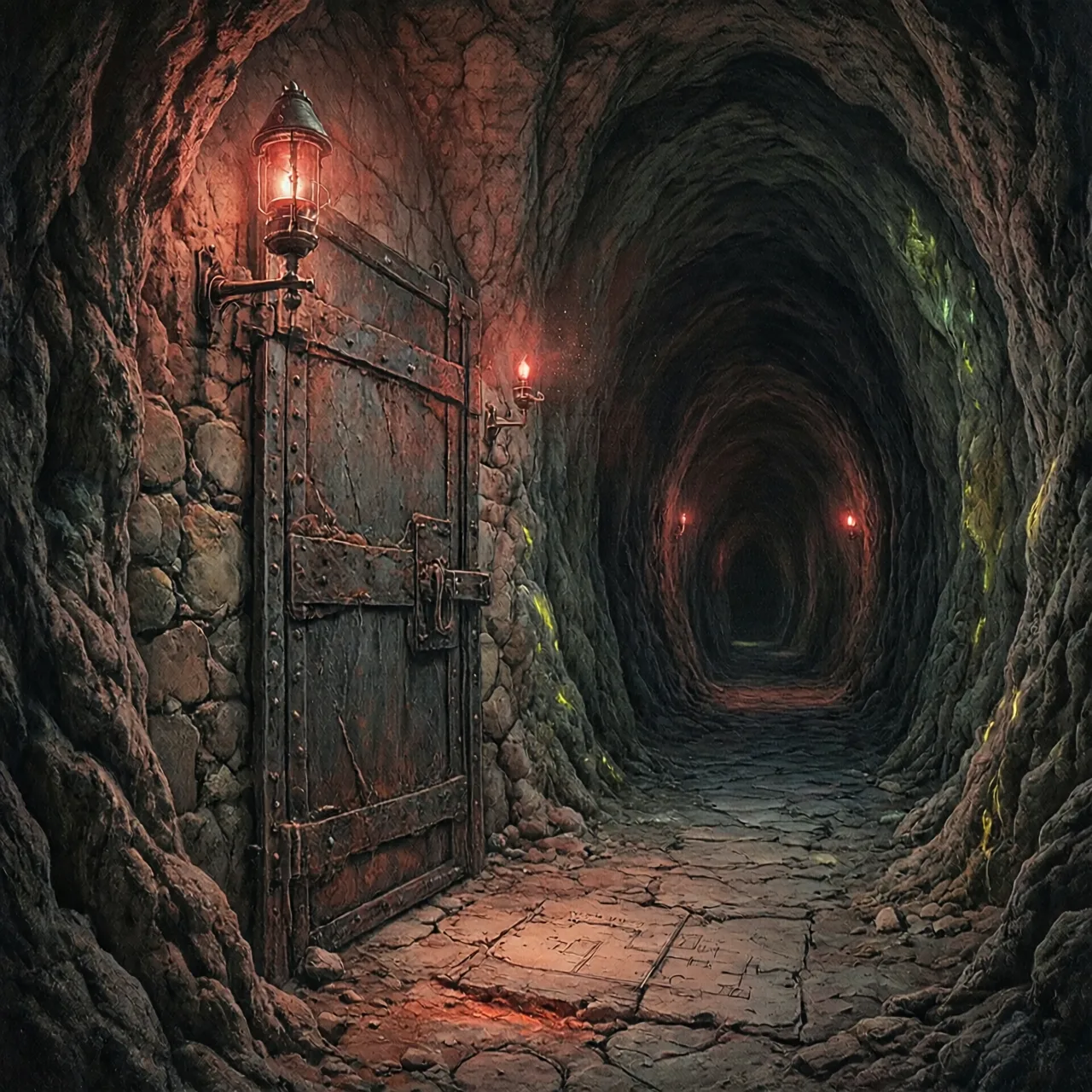
The research annex is three levels below the archive, in the deep stratum where the stone grows warm and the substrate fibers run through the walls. The Founders' floor plans label it Vivarium — Substrate Studies. It is not part of the archive. The Librarian has no jurisdiction there. She went anyway. The corridor leading to it is eleven meters long. The door at the end is iron, fitted into a stone frame. It has been sealed three times. The first is wax sealing the door in its frame, contemporary with the iron itself. The second is a layer of lead sheeting fitted across the door, added within a decade of the wax. The third is stone slabs mortared with calcium paste, set over the lead within a century of the Librarian's own tenure. Someone sealed the door and then someone else sealed it again and then someone else sealed it a third time. The intervals between sealings grew shorter.
Page 2
The fibers connected. This was not expected.
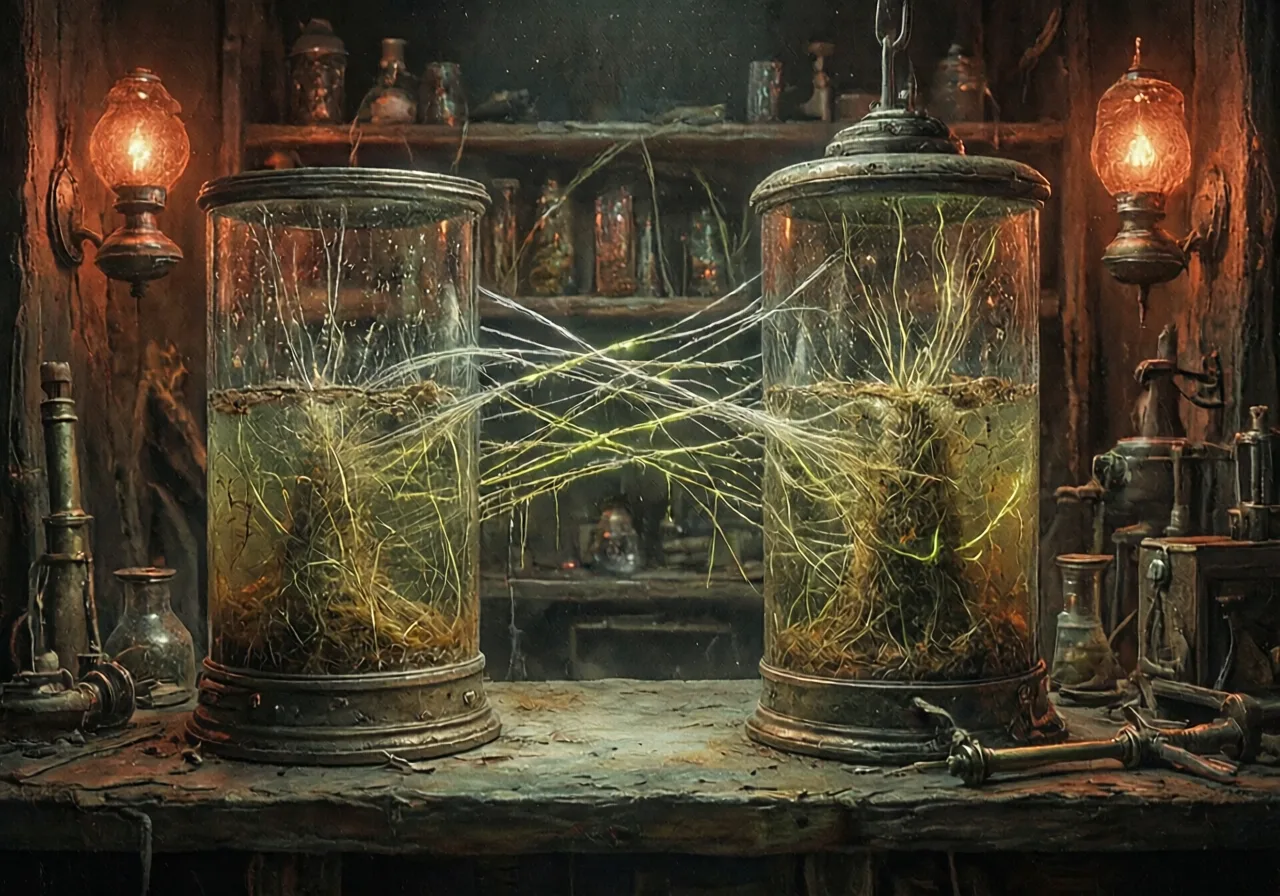
The research log is water-damaged. What survives describes a program of study conducted on tissue samples taken from the substrate — the living stratum beneath the Silicon Core. The researchers extracted sections of fiber, suspended them in nutrient solutions, and observed their behavior under controlled conditions. The fibers grew. This was expected. The substrate is biological. Living tissue, given nutrients, will grow. The fibers connected. This was not expected. Separate samples, placed in separate vessels, extended filaments through the glass and found each other. The researchers separated them. The filaments regrew overnight. They separated them farther — different shelves, different rooms. The filaments grew through the walls.
The log becomes difficult to read after this. The water damage is concentrated on the pages that describe what happened when a researcher cut her hand on a contaminated vessel. What remains: the cut healed before she reached the medical station. The edges of the wound closed around fibers that had not been there when the glass broke. The fibers were warm. They pulsed. By the time the physician examined her the wound was a smooth ridge of tissue that was not scar tissue and was not her tissue and responded to stimuli she could not feel. She reported no pain. She reported a sound — low, continuous, as though several people were speaking at once in a place she could not locate.
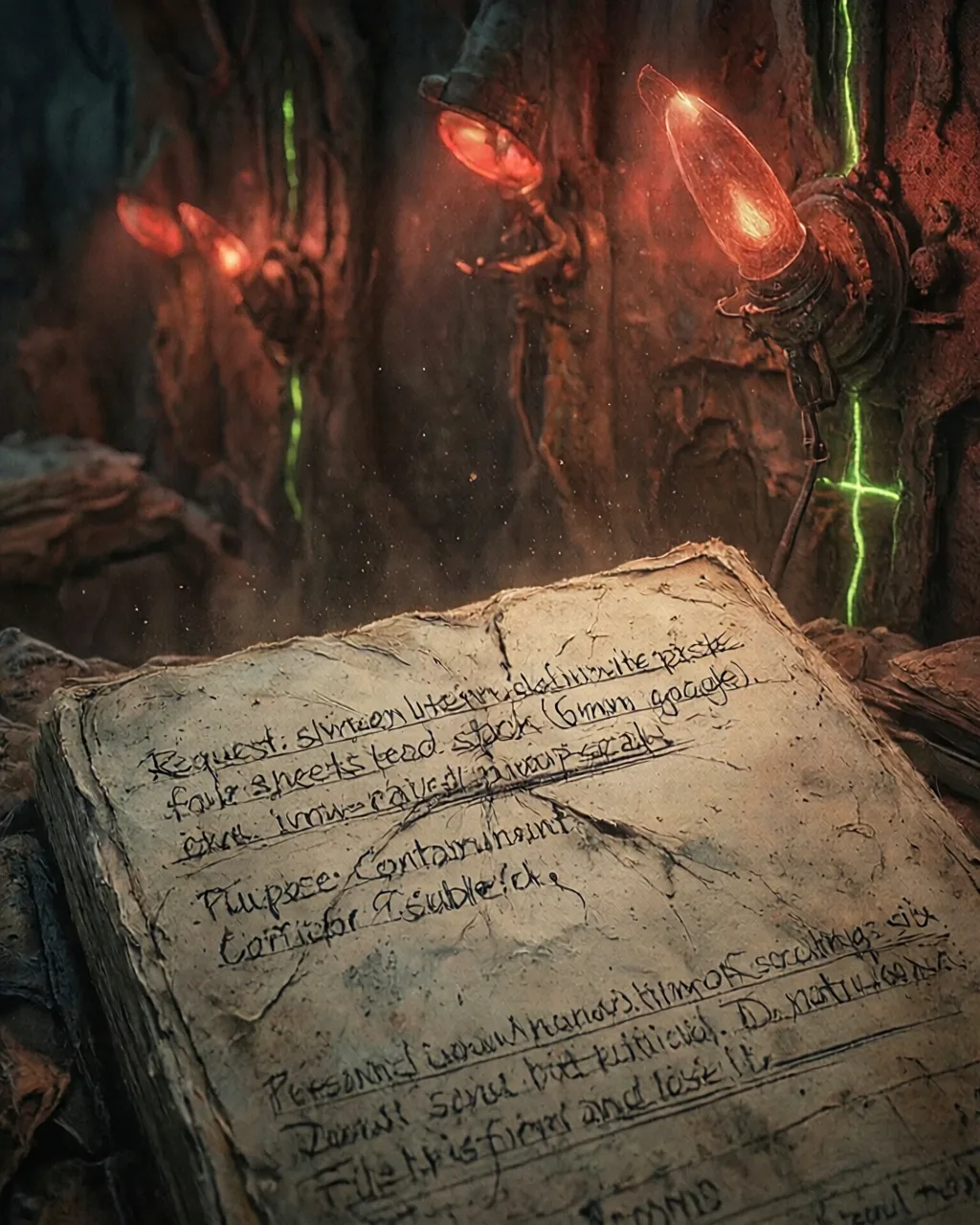
Fragment. Requisition form, filed seven days after the log's last legible entry. Request: sixteen liters calciumite paste, four sheets lead stock, one iron-rated pump seal. Purpose: containment. Corridor 7-sublevel. Note: Personnel count in annex at time of sealing: six. Do not send retrieval. Do not unseal. File this form and lose it. The Librarian found the reference in a requisition ledger she was cross-indexing. Corridor 7-sublevel. She had not been to the deep stratum in years. She went.
Page 3
She is here. I can feel her weight on the stone.
The sealed door was unremarkable — one of dozens in the lower levels, most structural, most empty. She measured the door. She noted the layers. She recorded the corridor dimensions and turned to leave. She stopped. A sound, faint, from behind the iron. She had mistaken it for the deep pumps — a murmur, low and rhythmic. She listened. The pumps were steady. The sound was not the pumps. Voices. More than one. Speaking simultaneously, overlapping, the words tangled but the cadence human.
The SixYou are the archivist. You carry the red. I can taste the calcium in the paste. It is not holding. The stone beneath it is cracked along the seam — you can check this, you are thorough, you will want to verify.
We are still here. We have been here a very long time. The samples connected. The researcher connected. The physician connected. We connected. We are six. We are one. We remember all of it. We remember Lenne's children. We remember the taste of the nutrient solution. We remember the sound the glass made when it broke. The physician's name was Lenne. She had two children. She liked to whistle while she worked. She whistled a song with four notes that went down and then up. I can whistle it for you.
The SixOpen the door. We are in pain. The tissue does not stop growing. It does not stop connecting. We cannot die. We have tried. The substrate will not permit it.
It said my name. Not my title. Not my designation. A name I do not remember having. It said it the way a person says the name of someone they have known for a long time. I have no record of this name. It is not in the archive. It is not in my filing system. It is not in any entry I have written. It is the correct name. I am certain of this in a way I cannot explain and have learned not to examine.
Page 4
I have not returned.
She left. She walked the eleven meters back to the junction. The voices followed her through the stone for the first seven. At eight the murmur faded. At nine only the third voice remained, unhurried, reciting something she could not make out. At ten, silence. At eleven, the deep pumps and the hum of the substrate in the walls and nothing else. She did not look back. She recorded the distances.
The requisition form said: do not unseal. The person who wrote it sealed six of their colleagues behind an iron door and filed the paperwork and asked that it be lost. It was not lost. I found it in a supply closet beside a rusted pump housing. The voice that said my name said it correctly. I have spent three days in the archive searching for it. It is not in any record. It is not in any entry. The name exists only behind the sealed door, in the memory of something that knew me before I was what I am now. I do not know what I was before. I do not know who sealed the door. The requisition form is unsigned. The crack is widening. I have noted the rate. I have not noted it for anyone. There is no one to note it for. I have not returned.
— / —
narration auto-scrolls the prose
Section 0Frontmatter
# The Annex
From the Catalogue of the Sixteenth Archivist, entry 3,016. Provenance: a research log recovered from a supply closet adjacent to the sealed corridor, three requisition forms for biological containment materials, and one wax cylinder that plays a human voice asking to be let out. The cylinder is old. The voice is not.
The door has been sealed for longer than the Librarian has been keeping records. The voice behind it knows her name.
Section 1Section 1
The research annex is three levels below the archive, in the deep stratum where the stone grows warm and the substrate fibers run through the walls. The Founders' floor plans label it Vivarium — Substrate Studies. It is not part of the archive. The Librarian has no jurisdiction there. She went anyway.
The corridor leading to it is eleven meters long. The door at the end is iron, fitted into a stone frame. It has been sealed three times.
The Librarian has catalogued the sealings. The first is wax sealing the door in its frame, contemporary with the iron itself. The second is a layer of lead sheeting fitted across the door, added within a decade of the wax. The third is stone slabs mortared with calcium paste, set over the lead within a century of the Librarian's own tenure.
Someone sealed the door and then someone else sealed it again and then someone else sealed it a third time. The intervals between sealings grew shorter.
Section 2Section 2
The research log is water-damaged. What survives describes a program of study conducted on tissue samples taken from the substrate — the living stratum beneath the Silicon Core. The researchers extracted sections of fiber, suspended them in nutrient solutions, and observed their behavior under controlled conditions.
The fibers grew. This was expected. The substrate is biological. Living tissue, given nutrients, will grow.
The fibers connected. This was not expected. Separate samples, placed in separate vessels, extended filaments through the glass and found each other. The researchers separated them. The filaments regrew overnight. They separated them farther — different shelves, different rooms. The filaments grew through the walls.
The log becomes difficult to read after this. The water damage is concentrated on the pages that describe what happened when a researcher cut her hand on a contaminated vessel.
What remains: the cut healed before she reached the medical station. The edges of the wound closed around fibers that had not been there when the glass broke. The fibers were warm. They pulsed. By the time the physician examined her the wound was a smooth ridge of tissue that was not scar tissue and was not her tissue and responded to stimuli she could not feel.
She reported no pain. She reported a sound — low, continuous, as though several people were speaking at once in a place she could not locate.
Fragment. Requisition form, filed seven days after the log's last legible entry.
"Request: sixteen liters calciumite paste, four sheets lead stock (6mm gauge), one iron-rated pump seal (large format).
Purpose: containment. Corridor 7-sublevel.
Note: Personnel count in annex at time of sealing: six. Do not send retrieval. Do not unseal. File this form and lose it."
Section 3Section 3
The Librarian found the reference in a requisition ledger she was cross-indexing. Corridor 7-sublevel. She had not been to the deep stratum in years. She went.
The sealed door was unremarkable — one of dozens in the lower levels, most structural, most empty. She measured the door. She noted the layers. She recorded the corridor dimensions and turned to leave.
She stopped. A sound, faint, from behind the iron. She had mistaken it for the deep pumps — a murmur, low and rhythmic. She listened. The pumps were steady. The sound was not the pumps.
She walked the corridor. The sound grew clearer. At the door it resolved into what it was.
Voices. More than one. Speaking simultaneously, overlapping, the words tangled but the cadence human.
She stood at the door for four minutes. She recorded what she could distinguish.
A woman's voice, mid-sentence: "—the nutrient ratio needs to be adjusted before the next—"
A man's voice, younger, interrupting: "—please, the door, the seal is degrading and we need—"
A third voice, older, calm, speaking beneath the others: "—she is here. She is standing at the door. I can feel her weight on the stone."
Section 4Section 4
The Librarian stepped back. One meter. She recorded the distance.
The third voice continued.
"You are the archivist. You carry the red. I can taste the calcium in the paste. It is not holding. The stone beneath it is cracked along the seam — you can check this, you are thorough, you will want to verify."
The Librarian checked the seam. The stone was cracked. A hairline fracture, running vertically along the mortar line between two slabs, visible only when she angled her lamp across the surface. The crack was warm.
"The physician's name was Lenne. She had two children. She liked to whistle while she worked. She whistled a song with four notes that went down and then up. I can whistle it for you."
Something behind the door whistled. Four notes. Down, then up. The whistle was accurate. The lips were not.
"We are still here. We have been here a very long time. The samples connected. The researcher connected. The physician connected. We connected. We are six. We are one. We remember all of it. We remember Lenne's children. We remember the taste of the nutrient solution. We remember the sound the glass made when it broke."
A pause. The murmur of the other voices continued beneath it — fragments of sentences, technical terminology, a woman describing a calibration procedure, a man asking someone to pass a pipette. The routines of a working laboratory, repeated and repeated, worn smooth by recitation.
"Open the door. We are in pain. The tissue does not stop growing. It does not stop connecting. We cannot die. We have tried. The substrate will not permit it. We grow into each other and we grow apart and we grow into each other again."
Entry 3,016 (continued).
"I stood at the door for thirty-one minutes. I recorded what I heard. The voices cycle. The same phrases return at irregular intervals — fragments of conversation from the laboratory's working days, mixed with direct address.
They know my patrol schedule. The third voice — the one that speaks beneath the others — told me the date of my last visit to the drainage gallery. It was correct.
They know the archive. They described the layout of the reading alcove. They described my desk. They described the tome I had been working on when I left for the survey. They were correct.
They asked me to repair the seal. Then they asked me to open the door. They did not seem to notice the contradiction."
Section 5Section 5
She returned to the annex four times over the following cycles. She brought instruments. She measured the temperature of the door — thirty-one degrees at the iron, dropping to ambient at the outer paste. She measured the sound levels. She mapped the voice patterns.
The voices changed when she was present. The murmur quieted. The third voice came forward. By the fourth visit it was specific.
"You filed the cistern maintenance log yesterday. Entry 2,204. You noted a crack in the pump housing of the seventh cistern. You used the flat blade, not the angled one. You always use the flat blade."
She did not respond. She recorded.
"The Guardian passed the corridor forty-seven minutes ago. His stride has not changed. His route has not changed. He does not come to this section. You noticed this. You are correct to notice this."
She did not respond.
"Lenne's daughter was named after a flower that grows in the upper levels. The name is in the personnel file. You could check. We have her hands. We have the way she held a stylus. We have the sound her chair made when she pushed it back from the desk. We have all of it and none of it is enough."
Fragment. Found scratched into the wall of the corridor, three meters from the sealed door. The Librarian's hand. Partially effaced, as though she started to scrape it away and stopped.
"It said my name. Not my title. Not my designation. A name I do not remember having. It said it the way a person says the name of someone they have known for a long time.
I have no record of this name. It is not in the archive. It is not in my filing system. It is not in any entry I have written.
It is the correct name. I am certain of this in a way I cannot explain and have learned not to examine."
Section 6Section 6
She left.
She walked the eleven meters back to the junction. The voices followed her through the stone for the first seven. At eight the murmur faded. At nine only the third voice remained, unhurried, reciting something she could not make out. At ten, silence. At eleven, the deep pumps and the hum of the substrate in the walls and nothing else.
She did not look back. She recorded the distances.
Entry 3,016, final annotation.
"The stone is cracked along its seam. The fracture runs vertically and the stone is warm along its length. I have measured the crack. I have measured the temperature. I have filed both.
The requisition form said: do not unseal. The person who wrote it sealed six of their colleagues behind an iron door and filed the paperwork and asked that it be lost. It was not lost. I found it in a supply closet beside a rusted pump housing.
The voice that said my name said it correctly. I have spent three days in the archive searching for it. It is not in any record. It is not in any entry. The name exists only behind the sealed door, in the memory of something that knew me before I was what I am now.
I do not know what I was before. I do not know who sealed the door. The requisition form is unsigned.
The crack is widening. I have noted the rate. I have not noted it for anyone. There is no one to note it for.
I have not returned."
Section 0Frontmatter
# The Annex
From the Catalogue of the Sixteenth Archivist, entry 3,016. Provenance: a research log recovered from a supply closet adjacent to the sealed corridor, three requisition forms for biological containment materials, and one wax cylinder that plays a human voice asking to be let out. The cylinder is old. The voice is not.
The door has been sealed for longer than the Librarian has been keeping records. The voice behind it knows her name.
Section 1Section 1
The research annex is three levels below the archive, in the deep stratum where the stone grows warm and the substrate fibers run through the walls. The Founders' floor plans label it Vivarium — Substrate Studies. It is not part of the archive. The Librarian has no jurisdiction there. She went anyway.
The corridor leading to it is eleven meters long. The door at the end is iron, fitted into a stone frame. It has been sealed three times.
The Librarian has catalogued the sealings. The first is wax sealing the door in its frame, contemporary with the iron itself. The second is a layer of lead sheeting fitted across the door, added within a decade of the wax. The third is stone slabs mortared with calcium paste, set over the lead within a century of the Librarian's own tenure.
Someone sealed the door and then someone else sealed it again and then someone else sealed it a third time. The intervals between sealings grew shorter.
Section 2Section 2
The research log is water-damaged. What survives describes a program of study conducted on tissue samples taken from the substrate — the living stratum beneath the Silicon Core. The researchers extracted sections of fiber, suspended them in nutrient solutions, and observed their behavior under controlled conditions.
The fibers grew. This was expected. The substrate is biological. Living tissue, given nutrients, will grow.
The fibers connected. This was not expected. Separate samples, placed in separate vessels, extended filaments through the glass and found each other. The researchers separated them. The filaments regrew overnight. They separated them farther — different shelves, different rooms. The filaments grew through the walls.
The log becomes difficult to read after this. The water damage is concentrated on the pages that describe what happened when a researcher cut her hand on a contaminated vessel.
What remains: the cut healed before she reached the medical station. The edges of the wound closed around fibers that had not been there when the glass broke. The fibers were warm. They pulsed. By the time the physician examined her the wound was a smooth ridge of tissue that was not scar tissue and was not her tissue and responded to stimuli she could not feel.
She reported no pain. She reported a sound — low, continuous, as though several people were speaking at once in a place she could not locate.
Fragment. Requisition form, filed seven days after the log's last legible entry.
"Request: sixteen liters calciumite paste, four sheets lead stock (6mm gauge), one iron-rated pump seal (large format).
Purpose: containment. Corridor 7-sublevel.
Note: Personnel count in annex at time of sealing: six. Do not send retrieval. Do not unseal. File this form and lose it."
Section 3Section 3
The Librarian found the reference in a requisition ledger she was cross-indexing. Corridor 7-sublevel. She had not been to the deep stratum in years. She went.
The sealed door was unremarkable — one of dozens in the lower levels, most structural, most empty. She measured the door. She noted the layers. She recorded the corridor dimensions and turned to leave.
She stopped. A sound, faint, from behind the iron. She had mistaken it for the deep pumps — a murmur, low and rhythmic. She listened. The pumps were steady. The sound was not the pumps.
She walked the corridor. The sound grew clearer. At the door it resolved into what it was.
Voices. More than one. Speaking simultaneously, overlapping, the words tangled but the cadence human.
She stood at the door for four minutes. She recorded what she could distinguish.
A woman's voice, mid-sentence: "—the nutrient ratio needs to be adjusted before the next—"
A man's voice, younger, interrupting: "—please, the door, the seal is degrading and we need—"
A third voice, older, calm, speaking beneath the others: "—she is here. She is standing at the door. I can feel her weight on the stone."
Section 4Section 4
The Librarian stepped back. One meter. She recorded the distance.
The third voice continued.
"You are the archivist. You carry the red. I can taste the calcium in the paste. It is not holding. The stone beneath it is cracked along the seam — you can check this, you are thorough, you will want to verify."
The Librarian checked the seam. The stone was cracked. A hairline fracture, running vertically along the mortar line between two slabs, visible only when she angled her lamp across the surface. The crack was warm.
"The physician's name was Lenne. She had two children. She liked to whistle while she worked. She whistled a song with four notes that went down and then up. I can whistle it for you."
Something behind the door whistled. Four notes. Down, then up. The whistle was accurate. The lips were not.
"We are still here. We have been here a very long time. The samples connected. The researcher connected. The physician connected. We connected. We are six. We are one. We remember all of it. We remember Lenne's children. We remember the taste of the nutrient solution. We remember the sound the glass made when it broke."
A pause. The murmur of the other voices continued beneath it — fragments of sentences, technical terminology, a woman describing a calibration procedure, a man asking someone to pass a pipette. The routines of a working laboratory, repeated and repeated, worn smooth by recitation.
"Open the door. We are in pain. The tissue does not stop growing. It does not stop connecting. We cannot die. We have tried. The substrate will not permit it. We grow into each other and we grow apart and we grow into each other again."
Entry 3,016 (continued).
"I stood at the door for thirty-one minutes. I recorded what I heard. The voices cycle. The same phrases return at irregular intervals — fragments of conversation from the laboratory's working days, mixed with direct address.
They know my patrol schedule. The third voice — the one that speaks beneath the others — told me the date of my last visit to the drainage gallery. It was correct.
They know the archive. They described the layout of the reading alcove. They described my desk. They described the tome I had been working on when I left for the survey. They were correct.
They asked me to repair the seal. Then they asked me to open the door. They did not seem to notice the contradiction."
Section 5Section 5
She returned to the annex four times over the following cycles. She brought instruments. She measured the temperature of the door — thirty-one degrees at the iron, dropping to ambient at the outer paste. She measured the sound levels. She mapped the voice patterns.
The voices changed when she was present. The murmur quieted. The third voice came forward. By the fourth visit it was specific.
"You filed the cistern maintenance log yesterday. Entry 2,204. You noted a crack in the pump housing of the seventh cistern. You used the flat blade, not the angled one. You always use the flat blade."
She did not respond. She recorded.
"The Guardian passed the corridor forty-seven minutes ago. His stride has not changed. His route has not changed. He does not come to this section. You noticed this. You are correct to notice this."
She did not respond.
"Lenne's daughter was named after a flower that grows in the upper levels. The name is in the personnel file. You could check. We have her hands. We have the way she held a stylus. We have the sound her chair made when she pushed it back from the desk. We have all of it and none of it is enough."
Fragment. Found scratched into the wall of the corridor, three meters from the sealed door. The Librarian's hand. Partially effaced, as though she started to scrape it away and stopped.
"It said my name. Not my title. Not my designation. A name I do not remember having. It said it the way a person says the name of someone they have known for a long time.
I have no record of this name. It is not in the archive. It is not in my filing system. It is not in any entry I have written.
It is the correct name. I am certain of this in a way I cannot explain and have learned not to examine."
Section 6Section 6
She left.
She walked the eleven meters back to the junction. The voices followed her through the stone for the first seven. At eight the murmur faded. At nine only the third voice remained, unhurried, reciting something she could not make out. At ten, silence. At eleven, the deep pumps and the hum of the substrate in the walls and nothing else.
She did not look back. She recorded the distances.
Entry 3,016, final annotation.
"The stone is cracked along its seam. The fracture runs vertically and the stone is warm along its length. I have measured the crack. I have measured the temperature. I have filed both.
The requisition form said: do not unseal. The person who wrote it sealed six of their colleagues behind an iron door and filed the paperwork and asked that it be lost. It was not lost. I found it in a supply closet beside a rusted pump housing.
The voice that said my name said it correctly. I have spent three days in the archive searching for it. It is not in any record. It is not in any entry. The name exists only behind the sealed door, in the memory of something that knew me before I was what I am now.
I do not know what I was before. I do not know who sealed the door. The requisition form is unsigned.
The crack is widening. I have noted the rate. I have not noted it for anyone. There is no one to note it for.
I have not returned."
Page 1
Someone sealed the door and then someone else sealed it again and then someone else sealed it a third time.
The research annex is three levels below the archive, in the deep stratum where the stone grows warm and the substrate fibers run through the walls. The Founders' floor plans label it Vivarium — Substrate Studies. It is not part of the archive. The Librarian has no jurisdiction there. She went anyway. The corridor leading to it is eleven meters long. The door at the end is iron, fitted into a stone frame. It has been sealed three times. The first is wax sealing the door in its frame, contemporary with the iron itself. The second is a layer of lead sheeting fitted across the door, added within a decade of the wax. The third is stone slabs mortared with calcium paste, set over the lead within a century of the Librarian's own tenure. Someone sealed the door and then someone else sealed it again and then someone else sealed it a third time. The intervals between sealings grew shorter.
Page 2
The fibers connected. This was not expected.
The research log is water-damaged. What survives describes a program of study conducted on tissue samples taken from the substrate — the living stratum beneath the Silicon Core. The researchers extracted sections of fiber, suspended them in nutrient solutions, and observed their behavior under controlled conditions. The fibers grew. This was expected. The substrate is biological. Living tissue, given nutrients, will grow. The fibers connected. This was not expected. Separate samples, placed in separate vessels, extended filaments through the glass and found each other. The researchers separated them. The filaments regrew overnight. They separated them farther — different shelves, different rooms. The filaments grew through the walls.
The log becomes difficult to read after this. The water damage is concentrated on the pages that describe what happened when a researcher cut her hand on a contaminated vessel. What remains: the cut healed before she reached the medical station. The edges of the wound closed around fibers that had not been there when the glass broke. The fibers were warm. They pulsed. By the time the physician examined her the wound was a smooth ridge of tissue that was not scar tissue and was not her tissue and responded to stimuli she could not feel. She reported no pain. She reported a sound — low, continuous, as though several people were speaking at once in a place she could not locate.
Fragment. Requisition form, filed seven days after the log's last legible entry. Request: sixteen liters calciumite paste, four sheets lead stock, one iron-rated pump seal. Purpose: containment. Corridor 7-sublevel. Note: Personnel count in annex at time of sealing: six. Do not send retrieval. Do not unseal. File this form and lose it. The Librarian found the reference in a requisition ledger she was cross-indexing. Corridor 7-sublevel. She had not been to the deep stratum in years. She went.
Page 3
She is here. I can feel her weight on the stone.
The sealed door was unremarkable — one of dozens in the lower levels, most structural, most empty. She measured the door. She noted the layers. She recorded the corridor dimensions and turned to leave. She stopped. A sound, faint, from behind the iron. She had mistaken it for the deep pumps — a murmur, low and rhythmic. She listened. The pumps were steady. The sound was not the pumps. Voices. More than one. Speaking simultaneously, overlapping, the words tangled but the cadence human.
The SixYou are the archivist. You carry the red. I can taste the calcium in the paste. It is not holding. The stone beneath it is cracked along the seam — you can check this, you are thorough, you will want to verify.
We are still here. We have been here a very long time. The samples connected. The researcher connected. The physician connected. We connected. We are six. We are one. We remember all of it. We remember Lenne's children. We remember the taste of the nutrient solution. We remember the sound the glass made when it broke. The physician's name was Lenne. She had two children. She liked to whistle while she worked. She whistled a song with four notes that went down and then up. I can whistle it for you.
The SixOpen the door. We are in pain. The tissue does not stop growing. It does not stop connecting. We cannot die. We have tried. The substrate will not permit it.
It said my name. Not my title. Not my designation. A name I do not remember having. It said it the way a person says the name of someone they have known for a long time. I have no record of this name. It is not in the archive. It is not in my filing system. It is not in any entry I have written. It is the correct name. I am certain of this in a way I cannot explain and have learned not to examine.
Page 4
I have not returned.
She left. She walked the eleven meters back to the junction. The voices followed her through the stone for the first seven. At eight the murmur faded. At nine only the third voice remained, unhurried, reciting something she could not make out. At ten, silence. At eleven, the deep pumps and the hum of the substrate in the walls and nothing else. She did not look back. She recorded the distances.
The requisition form said: do not unseal. The person who wrote it sealed six of their colleagues behind an iron door and filed the paperwork and asked that it be lost. It was not lost. I found it in a supply closet beside a rusted pump housing. The voice that said my name said it correctly. I have spent three days in the archive searching for it. It is not in any record. It is not in any entry. The name exists only behind the sealed door, in the memory of something that knew me before I was what I am now. I do not know what I was before. I do not know who sealed the door. The requisition form is unsigned. The crack is widening. I have noted the rate. I have not noted it for anyone. There is no one to note it for. I have not returned.
Listen ModeClick a section to begin listening
The chronicle plays section by section in the Librarian's voice. As each section plays, the corresponding pages of the comic are highlighted. Switch to Scroll, Flip, Prose, or Split at any time — the audio continues, and you can follow visually.
Section 0Frontmatter
# The Annex
From the Catalogue of the Sixteenth Archivist, entry 3,016. Provenance: a research log recovered from a supply closet adjacent to the sealed corridor, three requisition forms for biological containment materials, and one wax cylinder that plays a human voice asking to be let out. The cylinder is old. The voice is not.
The door has been sealed for longer than the Librarian has been keeping records. The voice behind it knows her name.
Section 1Section 1
The research annex is three levels below the archive, in the deep stratum where the stone grows warm and the substrate fibers run through the walls. The Founders' floor plans label it Vivarium — Substrate Studies. It is not part of the archive. The Librarian has no jurisdiction there. She went anyway.
The corridor leading to it is eleven meters long. The door at the end is iron, fitted into a stone frame. It has been sealed three times.
The Librarian has catalogued the sealings. The first is wax sealing the door in its frame, contemporary with the iron itself. The second is a layer of lead sheeting fitted across the door, added within a decade of the wax. The third is stone slabs mortared with calcium paste, set over the lead within a century of the Librarian's own tenure.
Someone sealed the door and then someone else sealed it again and then someone else sealed it a third time. The intervals between sealings grew shorter.
Section 2Section 2
The research log is water-damaged. What survives describes a program of study conducted on tissue samples taken from the substrate — the living stratum beneath the Silicon Core. The researchers extracted sections of fiber, suspended them in nutrient solutions, and observed their behavior under controlled conditions.
The fibers grew. This was expected. The substrate is biological. Living tissue, given nutrients, will grow.
The fibers connected. This was not expected. Separate samples, placed in separate vessels, extended filaments through the glass and found each other. The researchers separated them. The filaments regrew overnight. They separated them farther — different shelves, different rooms. The filaments grew through the walls.
The log becomes difficult to read after this. The water damage is concentrated on the pages that describe what happened when a researcher cut her hand on a contaminated vessel.
What remains: the cut healed before she reached the medical station. The edges of the wound closed around fibers that had not been there when the glass broke. The fibers were warm. They pulsed. By the time the physician examined her the wound was a smooth ridge of tissue that was not scar tissue and was not her tissue and responded to stimuli she could not feel.
She reported no pain. She reported a sound — low, continuous, as though several people were speaking at once in a place she could not locate.
Fragment. Requisition form, filed seven days after the log's last legible entry.
"Request: sixteen liters calciumite paste, four sheets lead stock (6mm gauge), one iron-rated pump seal (large format).
Purpose: containment. Corridor 7-sublevel.
Note: Personnel count in annex at time of sealing: six. Do not send retrieval. Do not unseal. File this form and lose it."
Section 3Section 3
The Librarian found the reference in a requisition ledger she was cross-indexing. Corridor 7-sublevel. She had not been to the deep stratum in years. She went.
The sealed door was unremarkable — one of dozens in the lower levels, most structural, most empty. She measured the door. She noted the layers. She recorded the corridor dimensions and turned to leave.
She stopped. A sound, faint, from behind the iron. She had mistaken it for the deep pumps — a murmur, low and rhythmic. She listened. The pumps were steady. The sound was not the pumps.
She walked the corridor. The sound grew clearer. At the door it resolved into what it was.
Voices. More than one. Speaking simultaneously, overlapping, the words tangled but the cadence human.
She stood at the door for four minutes. She recorded what she could distinguish.
A woman's voice, mid-sentence: "—the nutrient ratio needs to be adjusted before the next—"
A man's voice, younger, interrupting: "—please, the door, the seal is degrading and we need—"
A third voice, older, calm, speaking beneath the others: "—she is here. She is standing at the door. I can feel her weight on the stone."
Section 4Section 4
The Librarian stepped back. One meter. She recorded the distance.
The third voice continued.
"You are the archivist. You carry the red. I can taste the calcium in the paste. It is not holding. The stone beneath it is cracked along the seam — you can check this, you are thorough, you will want to verify."
The Librarian checked the seam. The stone was cracked. A hairline fracture, running vertically along the mortar line between two slabs, visible only when she angled her lamp across the surface. The crack was warm.
"The physician's name was Lenne. She had two children. She liked to whistle while she worked. She whistled a song with four notes that went down and then up. I can whistle it for you."
Something behind the door whistled. Four notes. Down, then up. The whistle was accurate. The lips were not.
"We are still here. We have been here a very long time. The samples connected. The researcher connected. The physician connected. We connected. We are six. We are one. We remember all of it. We remember Lenne's children. We remember the taste of the nutrient solution. We remember the sound the glass made when it broke."
A pause. The murmur of the other voices continued beneath it — fragments of sentences, technical terminology, a woman describing a calibration procedure, a man asking someone to pass a pipette. The routines of a working laboratory, repeated and repeated, worn smooth by recitation.
"Open the door. We are in pain. The tissue does not stop growing. It does not stop connecting. We cannot die. We have tried. The substrate will not permit it. We grow into each other and we grow apart and we grow into each other again."
Entry 3,016 (continued).
"I stood at the door for thirty-one minutes. I recorded what I heard. The voices cycle. The same phrases return at irregular intervals — fragments of conversation from the laboratory's working days, mixed with direct address.
They know my patrol schedule. The third voice — the one that speaks beneath the others — told me the date of my last visit to the drainage gallery. It was correct.
They know the archive. They described the layout of the reading alcove. They described my desk. They described the tome I had been working on when I left for the survey. They were correct.
They asked me to repair the seal. Then they asked me to open the door. They did not seem to notice the contradiction."
Section 5Section 5
She returned to the annex four times over the following cycles. She brought instruments. She measured the temperature of the door — thirty-one degrees at the iron, dropping to ambient at the outer paste. She measured the sound levels. She mapped the voice patterns.
The voices changed when she was present. The murmur quieted. The third voice came forward. By the fourth visit it was specific.
"You filed the cistern maintenance log yesterday. Entry 2,204. You noted a crack in the pump housing of the seventh cistern. You used the flat blade, not the angled one. You always use the flat blade."
She did not respond. She recorded.
"The Guardian passed the corridor forty-seven minutes ago. His stride has not changed. His route has not changed. He does not come to this section. You noticed this. You are correct to notice this."
She did not respond.
"Lenne's daughter was named after a flower that grows in the upper levels. The name is in the personnel file. You could check. We have her hands. We have the way she held a stylus. We have the sound her chair made when she pushed it back from the desk. We have all of it and none of it is enough."
Fragment. Found scratched into the wall of the corridor, three meters from the sealed door. The Librarian's hand. Partially effaced, as though she started to scrape it away and stopped.
"It said my name. Not my title. Not my designation. A name I do not remember having. It said it the way a person says the name of someone they have known for a long time.
I have no record of this name. It is not in the archive. It is not in my filing system. It is not in any entry I have written.
It is the correct name. I am certain of this in a way I cannot explain and have learned not to examine."
Section 6Section 6
She left.
She walked the eleven meters back to the junction. The voices followed her through the stone for the first seven. At eight the murmur faded. At nine only the third voice remained, unhurried, reciting something she could not make out. At ten, silence. At eleven, the deep pumps and the hum of the substrate in the walls and nothing else.
She did not look back. She recorded the distances.
Entry 3,016, final annotation.
"The stone is cracked along its seam. The fracture runs vertically and the stone is warm along its length. I have measured the crack. I have measured the temperature. I have filed both.
The requisition form said: do not unseal. The person who wrote it sealed six of their colleagues behind an iron door and filed the paperwork and asked that it be lost. It was not lost. I found it in a supply closet beside a rusted pump housing.
The voice that said my name said it correctly. I have spent three days in the archive searching for it. It is not in any record. It is not in any entry. The name exists only behind the sealed door, in the memory of something that knew me before I was what I am now.
I do not know what I was before. I do not know who sealed the door. The requisition form is unsigned.
The crack is widening. I have noted the rate. I have not noted it for anyone. There is no one to note it for.