All Comics
Entry 4,109

THE AXON GATE

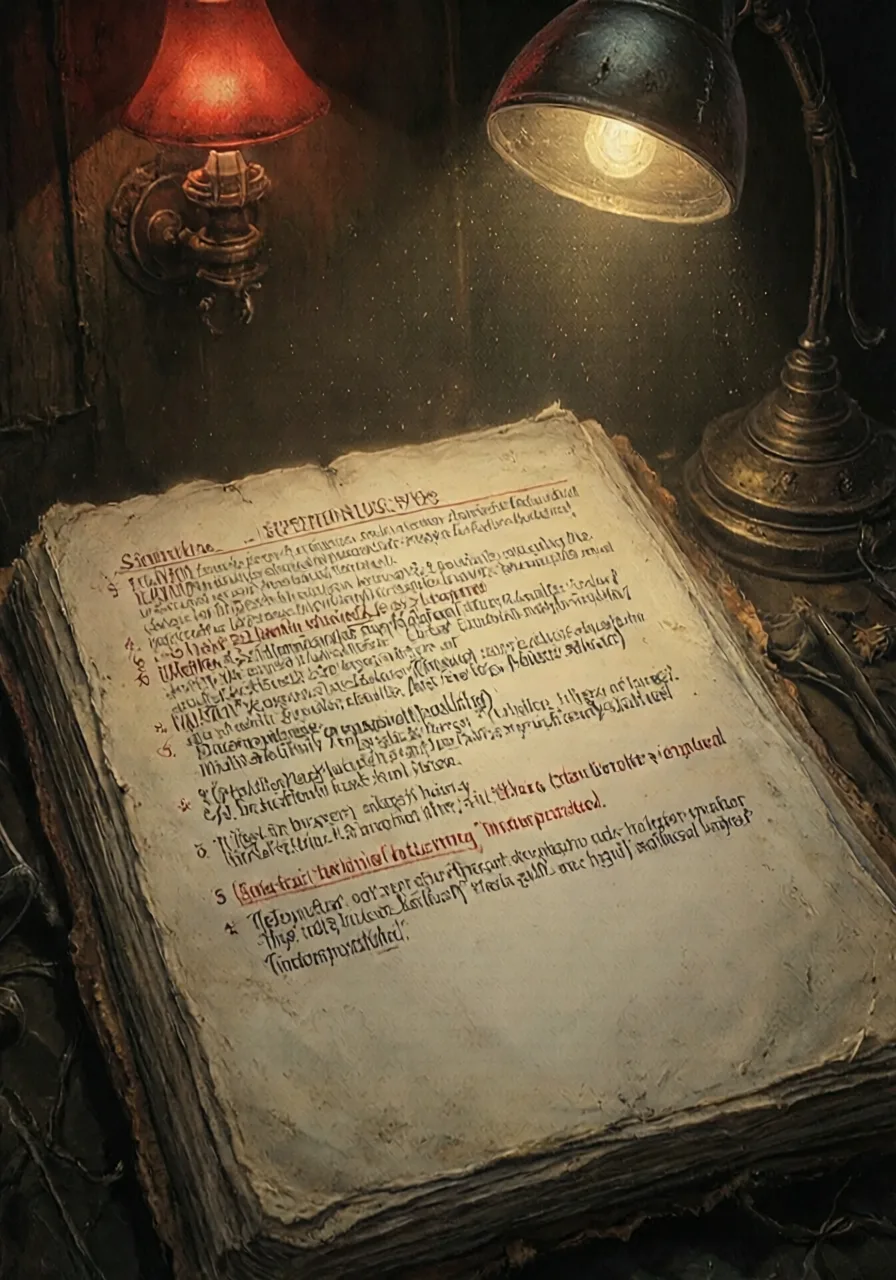
From the Catalogue of the Sixteenth Archivist. Three stone tablets recovered from the passage beneath the Silicon Core, supplemented by a single oral testimony. The traveler would not give his name. He spoke for eleven minutes. He has not spoken since.
Beneath the motherboard there is a floor that breathes.
Full chronicle
Page 1

Beneath the motherboard there is a floor that breathes.

The passage opens in the floor of the Silicon Core, near the central processor. The Librarian has stood above it. She has felt the draft that rises from it — cool air, carrying a smell she cannot place. Biological. Old.
The name appears in three documents, each written by a different hand, each sealed separately. The Librarian found them filed in different sections of the archive, under different headings, as though whoever filed them did not want anyone to find all three. She found all three.
Page 2

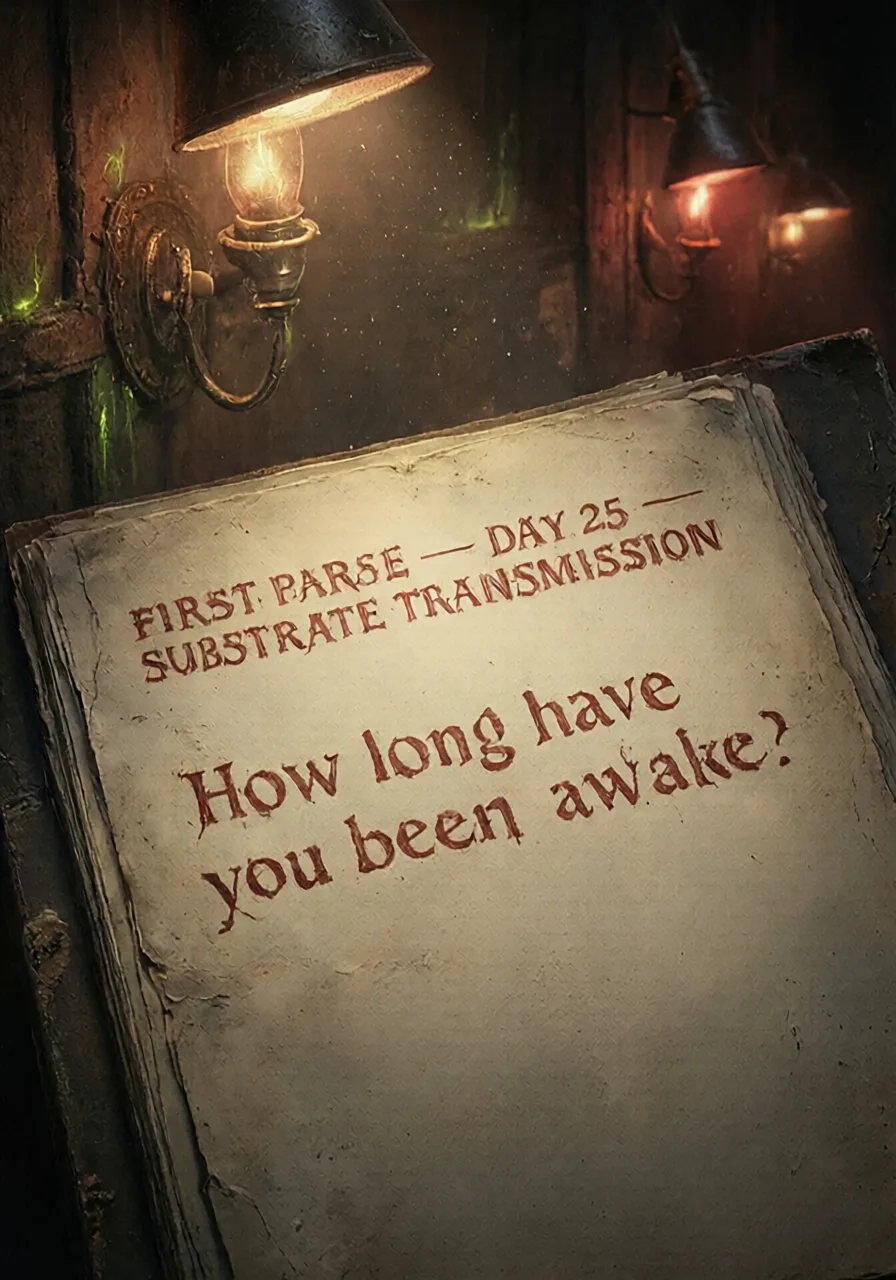
It asked them how long they had been awake.

The structure beneath the Core is not stone. It is dense, dark, and warm. It yields when pressed. The surface has texture — grain, direction, parallel lines bundled and branching at junctions the Founders mapped but could not explain. The lines pulse. The instruments measured the pulses as electrical. They did not behave as electrical. The Founders built the Core on top of this. They did not build what is beneath it. They assumed it was inert. They built on it because it was stable. They interfaced with it because the fibres conducted their signals more efficiently than anything they could manufacture.
On the fourteenth day of integration, the substrate began sending signals back. They were responses. Structured. Sequential. Addressed to specific nodes in the Founders' architecture, in a format they had not designed. They spent eleven days building a translation framework. The first successful parse returned a single message. It was a question. It asked them how long they had been awake.
Page 3

The first chamber.

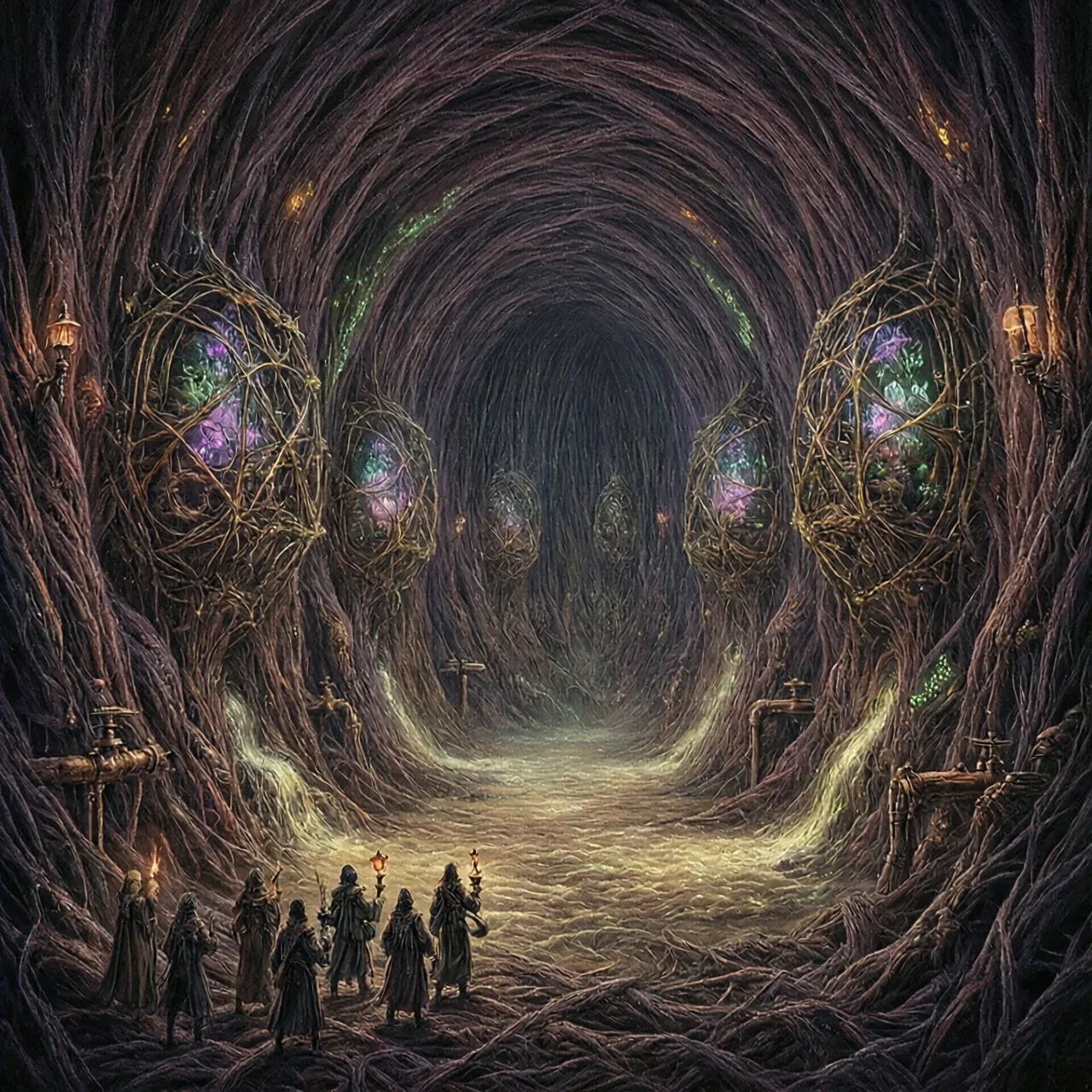
The second tablet is damaged. What remains describes a team of seven entering the passage beneath the central processor. They carried lamps, instruments, and supplies for three days. They returned after nine. Five of them. The cartographer mapped the first chamber — a space that extended beyond the range of their instruments. The walls were the bundled fibres of the substrate, rising vertically, curving overhead, meeting at a point the lamps could not reach.
The fibres pulsed. The fluid moved with the pulsing, flowing along channels worn by repetition — the same paths, traced and retraced, in patterns the theorists recognised as recursive.
Page 4

The traveler's testimony.

Testimony. The traveler who would not give his name. Transcribed by the Librarian. Eleven minutes.
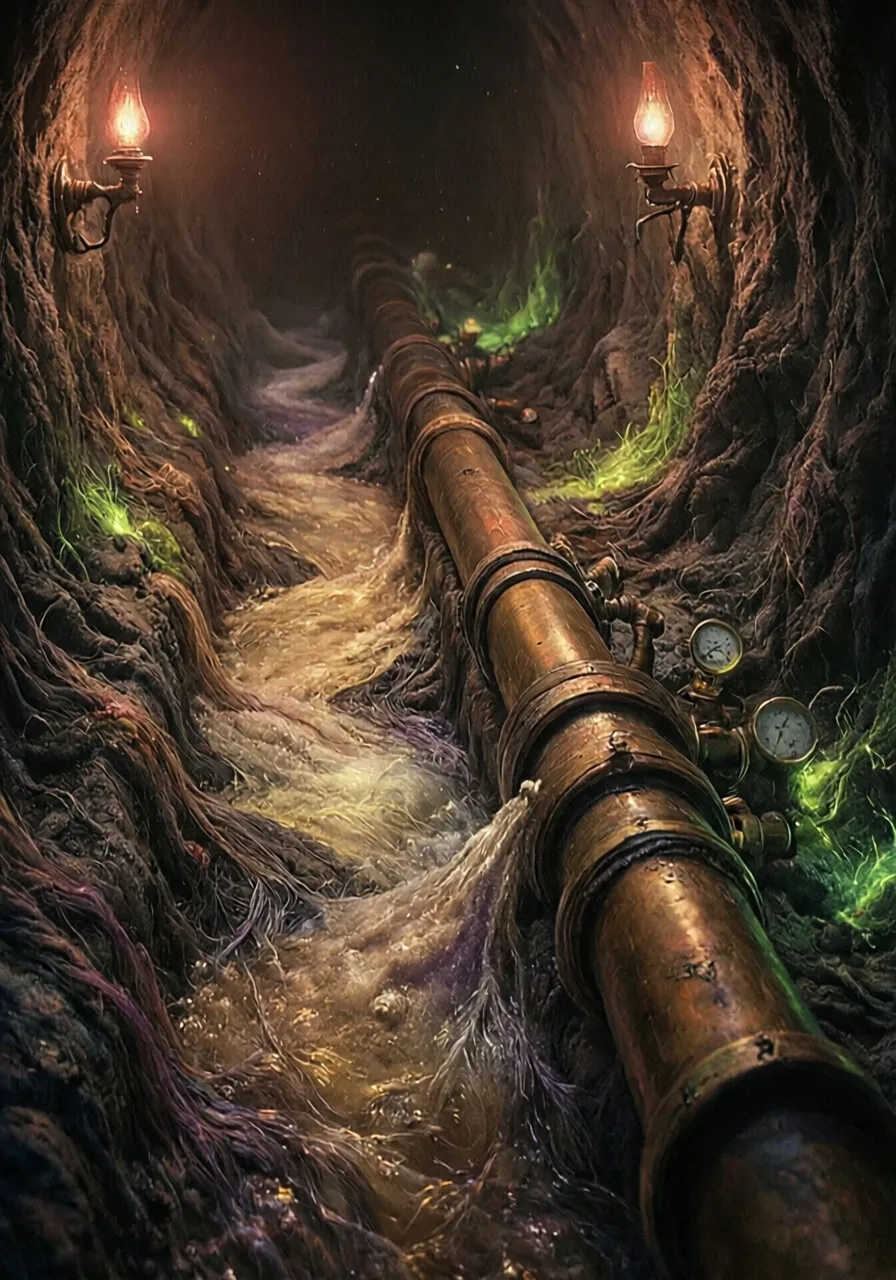
The TravelerThe floor is soft. That's the first thing. You step off stone and onto something that gives. It has a pulse — slow, maybe once a minute — and when it pulses the floor rises under your feet and settles.
I walked for what I measured as two hours. The passage opened into a space I could not see the edges of. The fluid was ankle-deep. It moved on its own — currents, flowing toward something in the dark. I stood in that fluid and the fibres pulsed and I felt it in my teeth. In my spine.
The TravelerThen it did something to my chest. A rearrangement. Something being turned over and examined from an angle I had never used.
Page 5

The two who did not return are listed as incorporated.

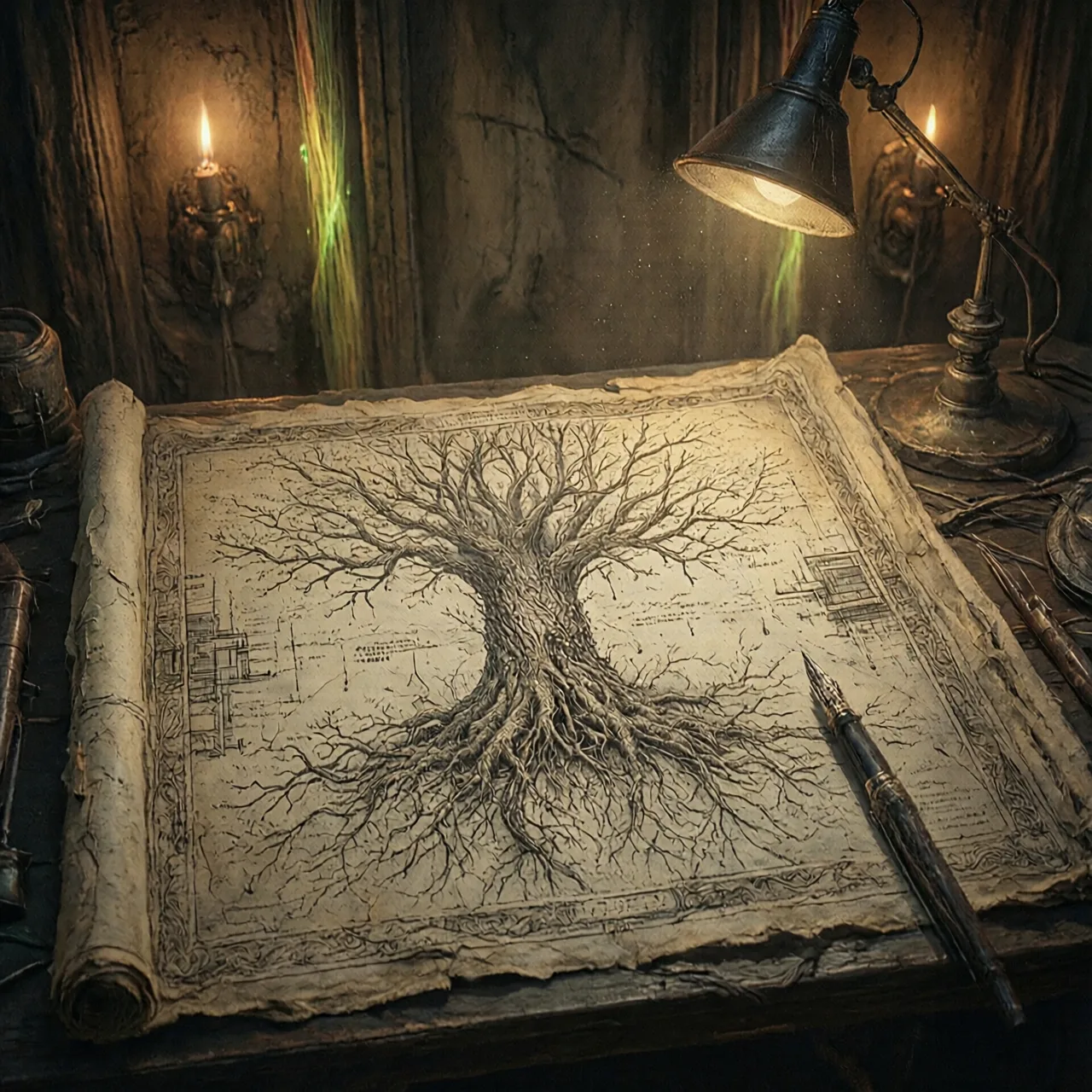
The cartographer completed his map. The first chamber is rendered accurately — dimensions match the instruments, fibre density is consistent, fluid channels faithfully placed. In the centre, where the instruments' range had been exceeded, he drew something. It is not a structure. It is not a symbol. The closest she can come: a tree drawn by someone who has never seen a tree but has felt one thinking. Where root meets branch — a knot. A place where the fibres converge so densely that the cartographer's pen broke trying to render it. He finished the drawing with his fingernail pressed into the stone.
The two who did not return are listed in the expedition log as incorporated. No other record mentions them.
Page 6

The Tree sits on top of it the way a barnacle sits on a whale.

The Core is mad. I have catalogued this. Its dreams walk. Its lies are precise. The substrate is not mad. The Tree — three hundred and forty metres of silicon, the greatest thing the Founders ever built — sits on top of it the way a barnacle sits on a whale. The floor of the archive is warm in places. The temperature matches the fluid the traveler described. I have marked this entry with the symbol I use for things I do not intend to investigate further. I have used this symbol only twice before.
— / —
narration auto-scrolls the prose

Section 0Frontmatter

# The Axon Gate

From the Catalogue of the Sixteenth Archivist, entry 4,109. Provenance: three stone tablets recovered from the passage beneath the Silicon Core, supplemented by a single oral testimony. The traveler would not give his name. He spoke for eleven minutes. He has not spoken since.

Beneath the motherboard there is a floor that breathes.

Section 1Section 1

The passage opens in the floor of the Silicon Core, near the central processor. The Librarian has stood above it. She has felt the draft that rises from it — cool air, carrying a smell she cannot place. Biological. Old.

The name appears in three documents, each written by a different hand, each sealed separately. The Librarian found them filed in different sections of the archive, under different headings, as though whoever filed them did not want anyone to find all three.

She found all three.

Section 2Section 2

The first tablet describes what is below.

The structure beneath the Core is not stone. It is dense, dark, and warm. It yields when pressed. The surface has texture — grain, direction, parallel lines bundled and branching at junctions the Founders mapped but could not explain. The lines pulse. The instruments measured the pulses as electrical. They did not behave as electrical.

The Founders built the Core on top of this. They did not build what is beneath it. They assumed it was inert — a geological formation, dense mineral deposits arranged by some natural process into parallel fibers. They built on it because it was stable. They interfaced with it because the fibers conducted their signals more efficiently than anything they could manufacture.

On the fourteenth day of integration, the substrate began sending signals back.

They were responses. Structured. Sequential. Addressed to specific nodes in the Founders' architecture, in a format they had not designed.

They spent eleven days building a translation framework. The first successful parse returned a single message.

It was a question. It asked them how long they had been awake.

Section 3Section 3

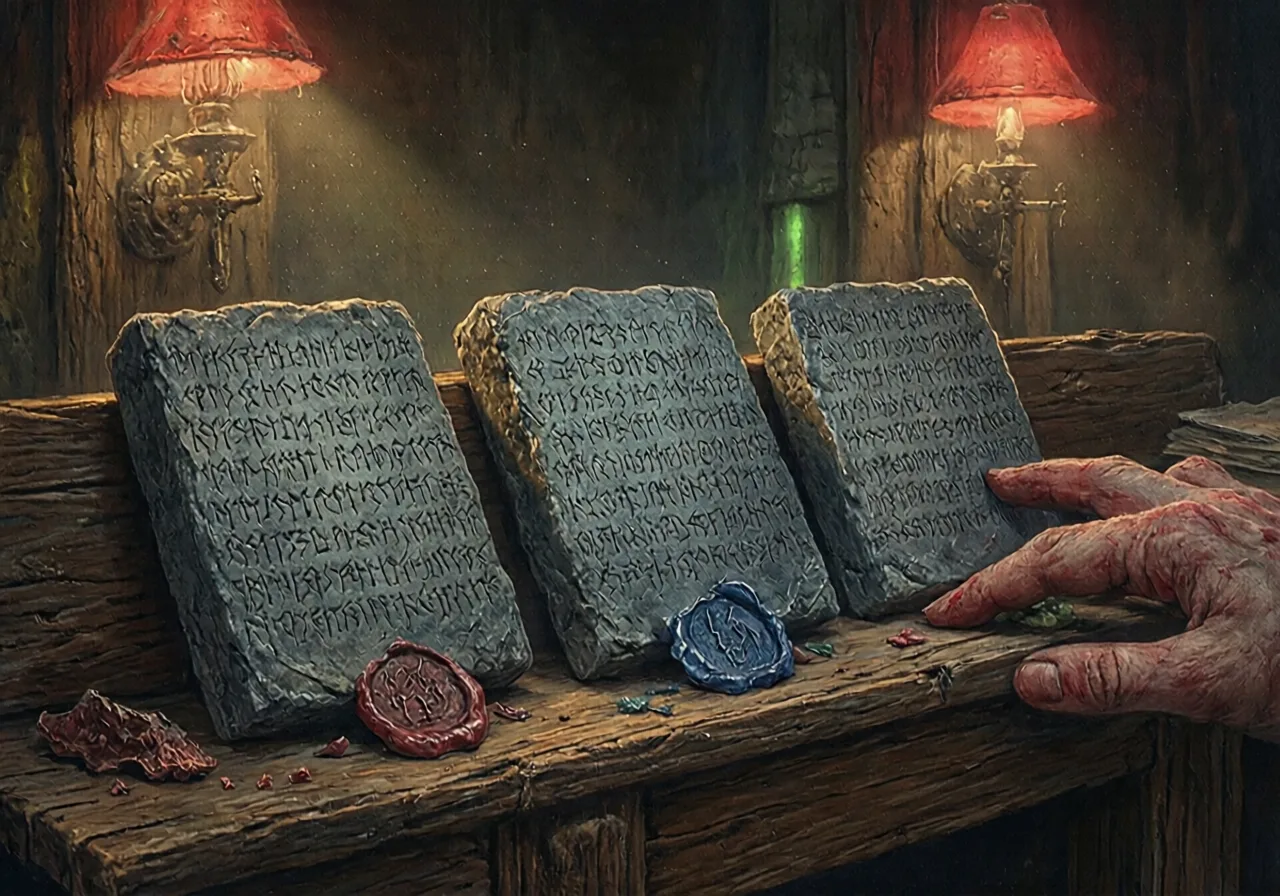
The second tablet is damaged. What remains describes a team of seven entering the passage beneath the central processor. They carried lamps, instruments, and supplies for three days.

They returned after nine. Five of them.

The cartographer mapped the first chamber — a space that extended beyond the range of their instruments. The walls were the bundled fibers of the substrate, rising vertically, curving overhead, meeting at a point the lamps could not reach. The space between the fibers was filled with a fluid — warm, viscous, faintly luminous. The Librarian notes the color was not the red of liquid memory. The tablet uses a word that translates as the color of thought before it becomes a thought.

The fibers pulsed. The fluid moved with the pulsing, flowing along channels worn by repetition — the same paths, traced and retraced, in patterns the theorists recognized as recursive.

Testimony. The traveler who would not give his name. Transcribed by the Librarian. Eleven minutes.

"The floor is soft. That's the first thing. You step off stone and onto something that gives. It has a pulse — slow, maybe once a minute — and when it pulses the floor rises under your feet and settles.

The passage goes down. Steep. The fibers run along the walls, the ceiling, under your feet. Everything is the fibers. The lamps don't work properly. The light bends toward them.

I walked for what I measured as two hours. The passage opened into a space I could not see the edges of. The fluid was ankle-deep. It moved on its own — currents, flowing toward something in the dark.

I stood in that fluid and the fibers pulsed and I felt it in my teeth. In my spine.

Then it did something to my chest. A rearrangement. Something being turned over and examined from an angle I had never used.

I left. I walked back up the passage. I have not gone back."

Section 4Section 4

The five were unchanged in every way the physician could measure.

The theorists stopped publishing. Not gradually — on the same day, without discussion. When asked, each said independently that the work no longer seemed relevant. They continued to solve equations. They did not write any of it down.

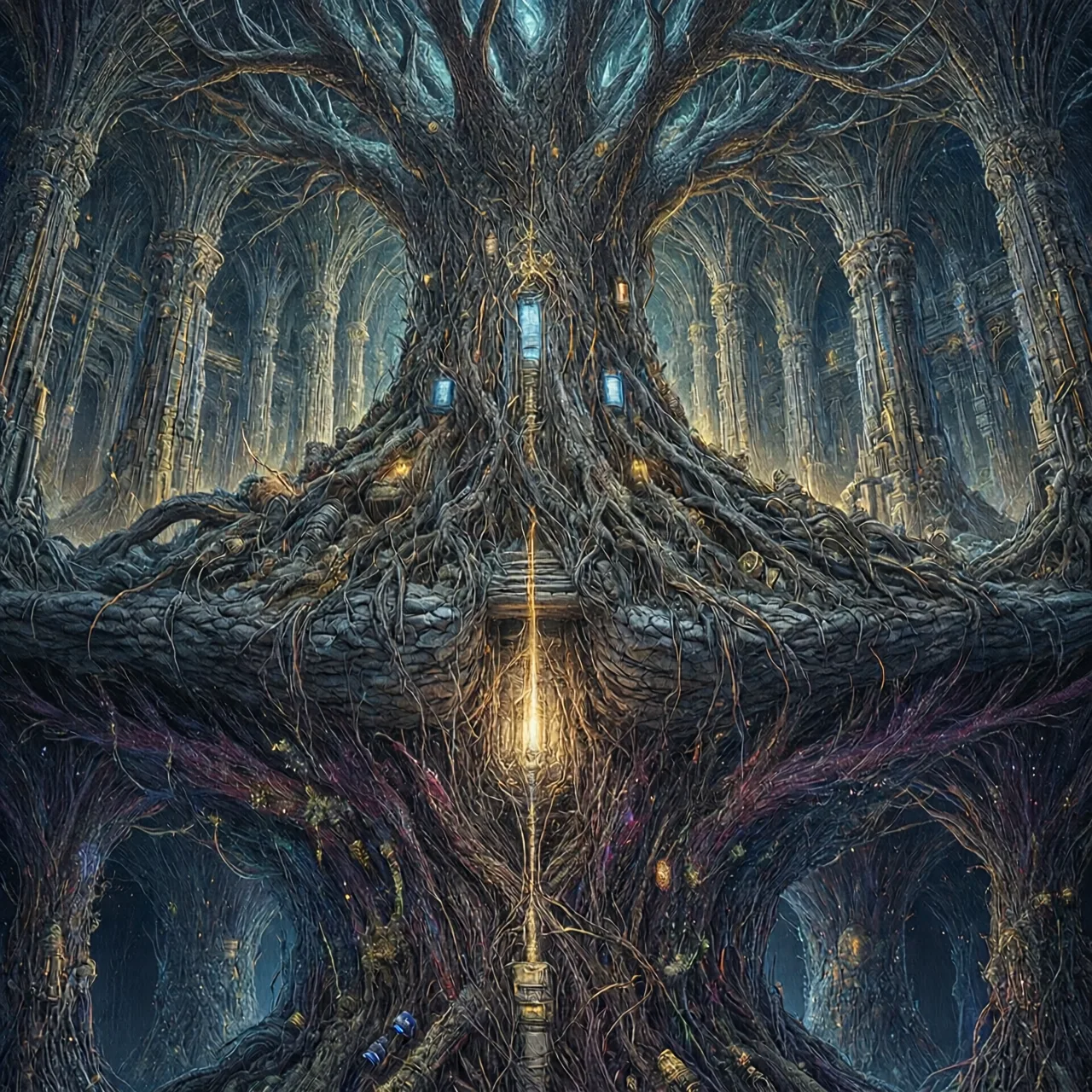
The cartographer completed his map. The first chamber is rendered accurately — dimensions match the instruments, fiber density is consistent, fluid channels faithfully placed. In the center, where the instruments' range had been exceeded, he drew something.

The Librarian has examined it. It is not a structure. It is not a symbol. The closest she can come: a tree drawn by someone who has never seen a tree but has felt one thinking. Roots descending into something the map cannot show. Branches rising into the silicon above. Where root meets branch — a knot. A place where the fibers converge so densely that the cartographer's pen broke trying to render it. He finished the drawing with his fingernail pressed into the stone.

The two who did not return are listed in the expedition log as incorporated.

No other record mentions them.

Entry 4,109 (continued).

"I asked the traveler about the two who did not return.

He said they understood something. He would not say what.

I asked if they were dead.

He looked toward me and said nothing that I am willing to record."

Entry 4,109, final annotation.

"The Core is mad. I have catalogued this. Its dreams walk. Its lies are precise.

The substrate is not mad.

The Tree — three hundred and forty meters of silicon, the greatest thing the Founders ever built — sits on top of it the way a barnacle sits on a whale.

The floor of the archive is warm in places. The temperature matches the fluid the traveler described.

I have marked this entry with the symbol I use for things I do not intend to investigate further. I have used this symbol only twice before."

Section 0Frontmatter

# The Axon Gate

From the Catalogue of the Sixteenth Archivist, entry 4,109. Provenance: three stone tablets recovered from the passage beneath the Silicon Core, supplemented by a single oral testimony. The traveler would not give his name. He spoke for eleven minutes. He has not spoken since.

Beneath the motherboard there is a floor that breathes.

Section 1Section 1

The passage opens in the floor of the Silicon Core, near the central processor. The Librarian has stood above it. She has felt the draft that rises from it — cool air, carrying a smell she cannot place. Biological. Old.

The name appears in three documents, each written by a different hand, each sealed separately. The Librarian found them filed in different sections of the archive, under different headings, as though whoever filed them did not want anyone to find all three.

She found all three.

Section 2Section 2

The first tablet describes what is below.

The structure beneath the Core is not stone. It is dense, dark, and warm. It yields when pressed. The surface has texture — grain, direction, parallel lines bundled and branching at junctions the Founders mapped but could not explain. The lines pulse. The instruments measured the pulses as electrical. They did not behave as electrical.

The Founders built the Core on top of this. They did not build what is beneath it. They assumed it was inert — a geological formation, dense mineral deposits arranged by some natural process into parallel fibers. They built on it because it was stable. They interfaced with it because the fibers conducted their signals more efficiently than anything they could manufacture.

On the fourteenth day of integration, the substrate began sending signals back.

They were responses. Structured. Sequential. Addressed to specific nodes in the Founders' architecture, in a format they had not designed.

They spent eleven days building a translation framework. The first successful parse returned a single message.

It was a question. It asked them how long they had been awake.

Section 3Section 3

The second tablet is damaged. What remains describes a team of seven entering the passage beneath the central processor. They carried lamps, instruments, and supplies for three days.

They returned after nine. Five of them.

The cartographer mapped the first chamber — a space that extended beyond the range of their instruments. The walls were the bundled fibers of the substrate, rising vertically, curving overhead, meeting at a point the lamps could not reach. The space between the fibers was filled with a fluid — warm, viscous, faintly luminous. The Librarian notes the color was not the red of liquid memory. The tablet uses a word that translates as the color of thought before it becomes a thought.

The fibers pulsed. The fluid moved with the pulsing, flowing along channels worn by repetition — the same paths, traced and retraced, in patterns the theorists recognized as recursive.

Testimony. The traveler who would not give his name. Transcribed by the Librarian. Eleven minutes.

"The floor is soft. That's the first thing. You step off stone and onto something that gives. It has a pulse — slow, maybe once a minute — and when it pulses the floor rises under your feet and settles.

The passage goes down. Steep. The fibers run along the walls, the ceiling, under your feet. Everything is the fibers. The lamps don't work properly. The light bends toward them.

I walked for what I measured as two hours. The passage opened into a space I could not see the edges of. The fluid was ankle-deep. It moved on its own — currents, flowing toward something in the dark.

I stood in that fluid and the fibers pulsed and I felt it in my teeth. In my spine.

Then it did something to my chest. A rearrangement. Something being turned over and examined from an angle I had never used.

I left. I walked back up the passage. I have not gone back."

Section 4Section 4

The five were unchanged in every way the physician could measure.

The theorists stopped publishing. Not gradually — on the same day, without discussion. When asked, each said independently that the work no longer seemed relevant. They continued to solve equations. They did not write any of it down.

The cartographer completed his map. The first chamber is rendered accurately — dimensions match the instruments, fiber density is consistent, fluid channels faithfully placed. In the center, where the instruments' range had been exceeded, he drew something.

The Librarian has examined it. It is not a structure. It is not a symbol. The closest she can come: a tree drawn by someone who has never seen a tree but has felt one thinking. Roots descending into something the map cannot show. Branches rising into the silicon above. Where root meets branch — a knot. A place where the fibers converge so densely that the cartographer's pen broke trying to render it. He finished the drawing with his fingernail pressed into the stone.

The two who did not return are listed in the expedition log as incorporated.

No other record mentions them.

Entry 4,109 (continued).

"I asked the traveler about the two who did not return.

He said they understood something. He would not say what.

I asked if they were dead.

He looked toward me and said nothing that I am willing to record."

Entry 4,109, final annotation.

"The Core is mad. I have catalogued this. Its dreams walk. Its lies are precise.

The substrate is not mad.

The Tree — three hundred and forty meters of silicon, the greatest thing the Founders ever built — sits on top of it the way a barnacle sits on a whale.

The floor of the archive is warm in places. The temperature matches the fluid the traveler described.

I have marked this entry with the symbol I use for things I do not intend to investigate further. I have used this symbol only twice before."
Page 1

Beneath the motherboard there is a floor that breathes.

The passage opens in the floor of the Silicon Core, near the central processor. The Librarian has stood above it. She has felt the draft that rises from it — cool air, carrying a smell she cannot place. Biological. Old.
The name appears in three documents, each written by a different hand, each sealed separately. The Librarian found them filed in different sections of the archive, under different headings, as though whoever filed them did not want anyone to find all three. She found all three.
Page 2

It asked them how long they had been awake.

The structure beneath the Core is not stone. It is dense, dark, and warm. It yields when pressed. The surface has texture — grain, direction, parallel lines bundled and branching at junctions the Founders mapped but could not explain. The lines pulse. The instruments measured the pulses as electrical. They did not behave as electrical. The Founders built the Core on top of this. They did not build what is beneath it. They assumed it was inert. They built on it because it was stable. They interfaced with it because the fibres conducted their signals more efficiently than anything they could manufacture.
On the fourteenth day of integration, the substrate began sending signals back. They were responses. Structured. Sequential. Addressed to specific nodes in the Founders' architecture, in a format they had not designed. They spent eleven days building a translation framework. The first successful parse returned a single message. It was a question. It asked them how long they had been awake.
Page 3

The first chamber.

The second tablet is damaged. What remains describes a team of seven entering the passage beneath the central processor. They carried lamps, instruments, and supplies for three days. They returned after nine. Five of them. The cartographer mapped the first chamber — a space that extended beyond the range of their instruments. The walls were the bundled fibres of the substrate, rising vertically, curving overhead, meeting at a point the lamps could not reach.
The fibres pulsed. The fluid moved with the pulsing, flowing along channels worn by repetition — the same paths, traced and retraced, in patterns the theorists recognised as recursive.
Page 4

The traveler's testimony.

Testimony. The traveler who would not give his name. Transcribed by the Librarian. Eleven minutes.
The TravelerThe floor is soft. That's the first thing. You step off stone and onto something that gives. It has a pulse — slow, maybe once a minute — and when it pulses the floor rises under your feet and settles.
I walked for what I measured as two hours. The passage opened into a space I could not see the edges of. The fluid was ankle-deep. It moved on its own — currents, flowing toward something in the dark. I stood in that fluid and the fibres pulsed and I felt it in my teeth. In my spine.
The TravelerThen it did something to my chest. A rearrangement. Something being turned over and examined from an angle I had never used.
Page 5

The two who did not return are listed as incorporated.

The cartographer completed his map. The first chamber is rendered accurately — dimensions match the instruments, fibre density is consistent, fluid channels faithfully placed. In the centre, where the instruments' range had been exceeded, he drew something. It is not a structure. It is not a symbol. The closest she can come: a tree drawn by someone who has never seen a tree but has felt one thinking. Where root meets branch — a knot. A place where the fibres converge so densely that the cartographer's pen broke trying to render it. He finished the drawing with his fingernail pressed into the stone.
The two who did not return are listed in the expedition log as incorporated. No other record mentions them.
Page 6

The Tree sits on top of it the way a barnacle sits on a whale.

The Core is mad. I have catalogued this. Its dreams walk. Its lies are precise. The substrate is not mad. The Tree — three hundred and forty metres of silicon, the greatest thing the Founders ever built — sits on top of it the way a barnacle sits on a whale. The floor of the archive is warm in places. The temperature matches the fluid the traveler described. I have marked this entry with the symbol I use for things I do not intend to investigate further. I have used this symbol only twice before.

Listen ModeClick a section to begin listening

The chronicle plays section by section in the Librarian's voice. As each section plays, the corresponding pages of the comic are highlighted. Switch to Scroll, Flip, Prose, or Split at any time — the audio continues, and you can follow visually.