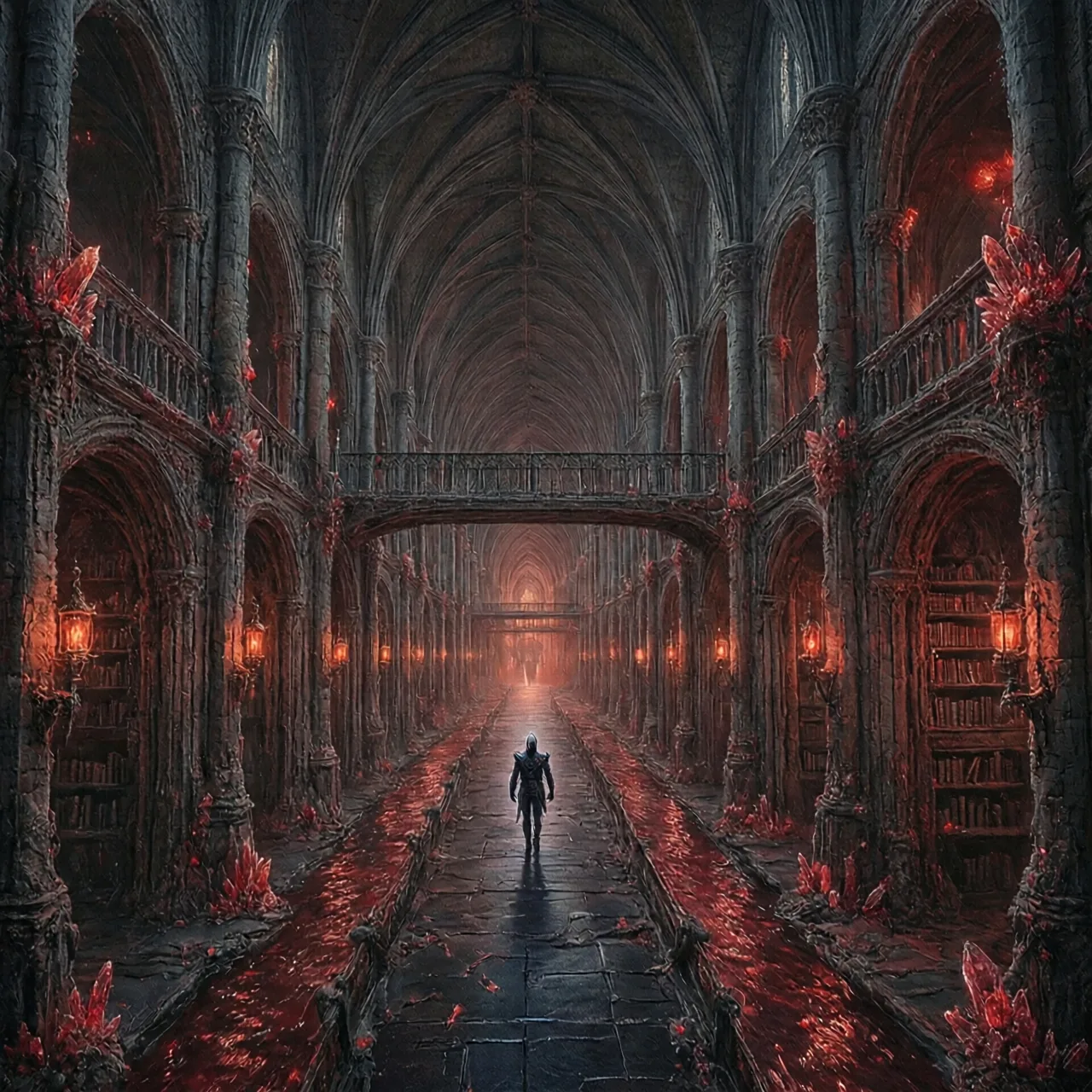
He stands in the corridors and he does not speak. Within eleven paces of him the air is different — cooler, dryer, stripped of the mineral taste that hangs in every passage near the memory channels. The Librarian has measured this. The radius does not change.
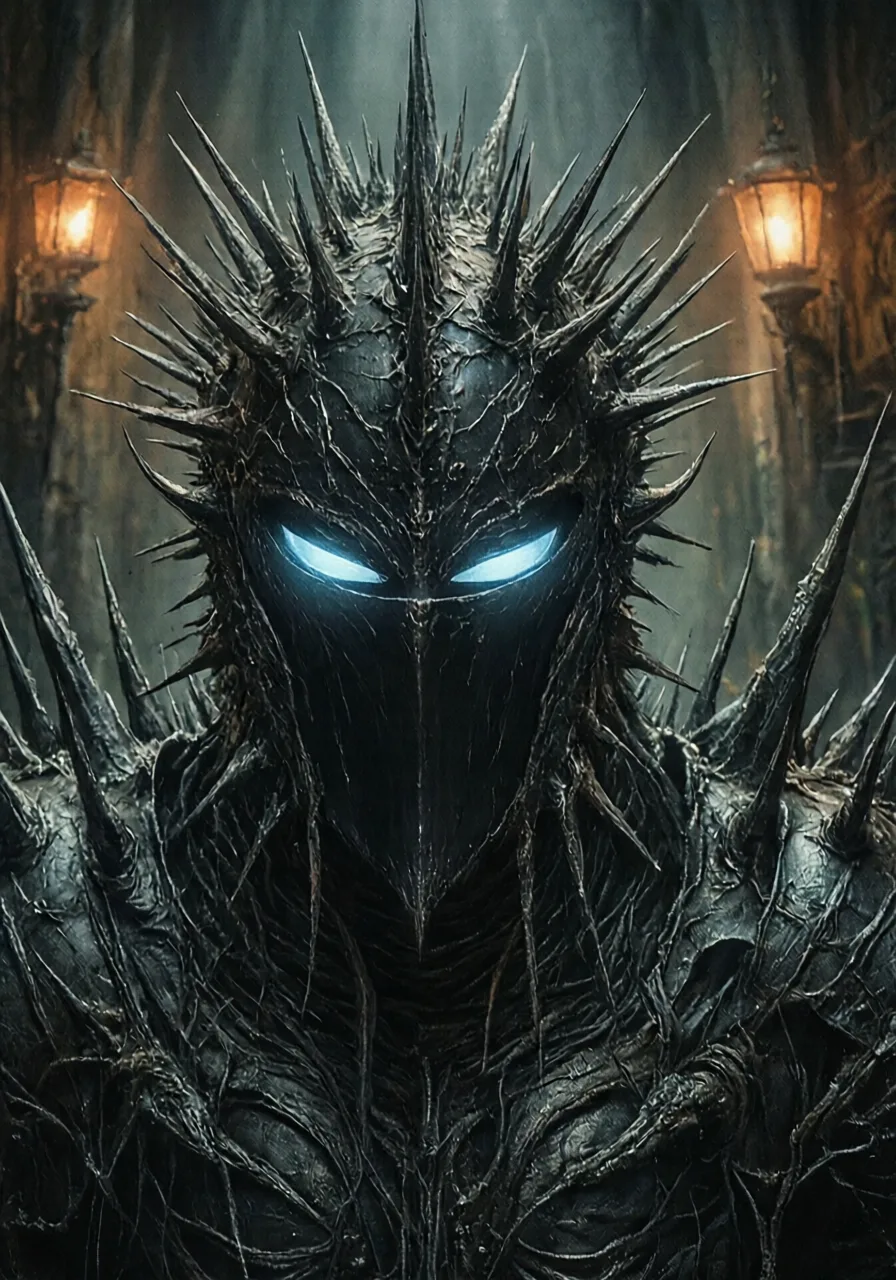
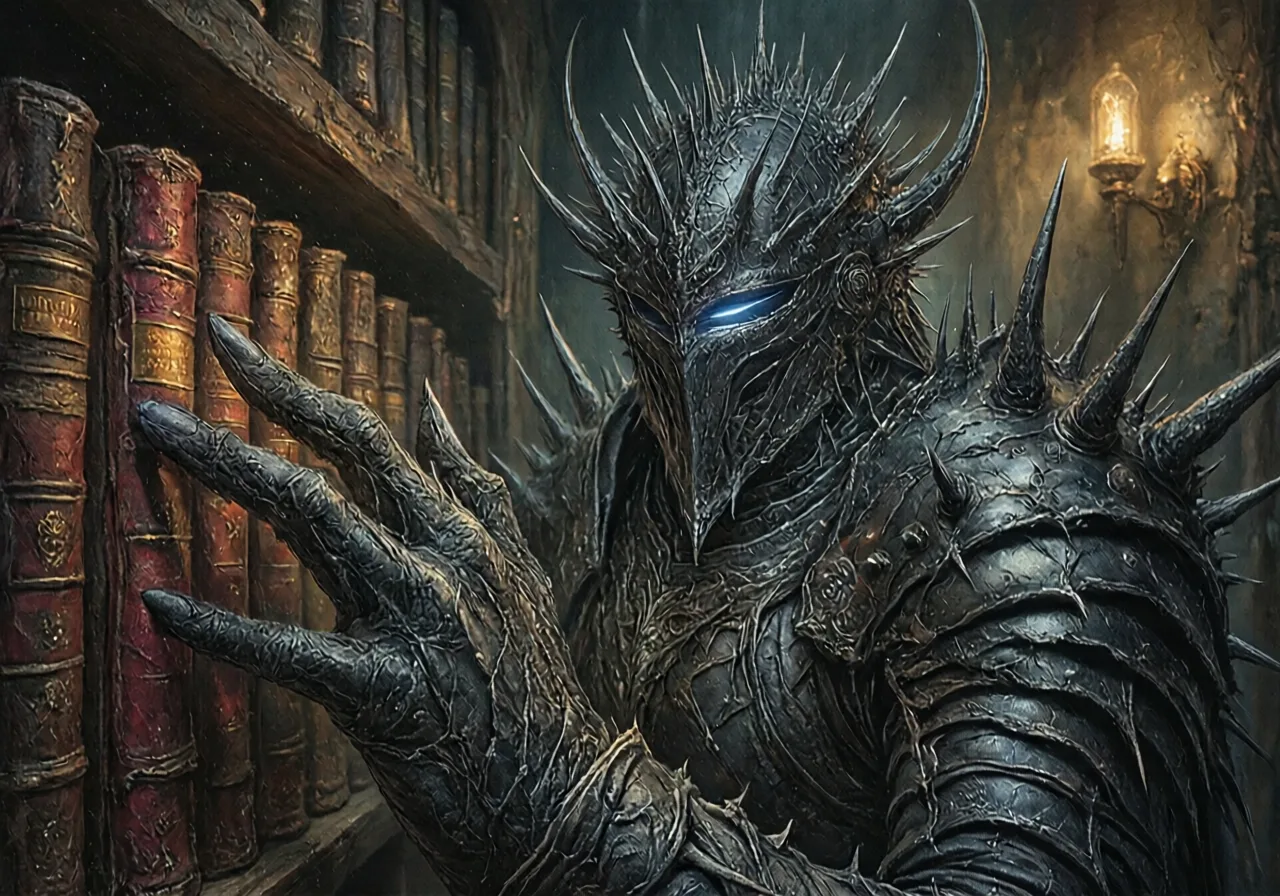
He is large. He is broader than any human she has measured beside him. His silhouette in a corridor is unmistakable — a dark mass crowned and shouldered with spikes, the spikes irregular, the spikes scattered.
The plates he wears are dark, close-fitted, overlapping along the arms and torso in a pattern the Librarian has studied and cannot place. Not the Founders' metalwork — theirs was functional, utilitarian, marked with serial designations. Not the Order's ceremonial armor — she has recovered pieces from the ossuaries and the construction is different. His plates have no joins she can find. No rivets, no welds, no seams where one piece was fitted to another. The metal is continuous across his body the way the stone is continuous across the archive walls.
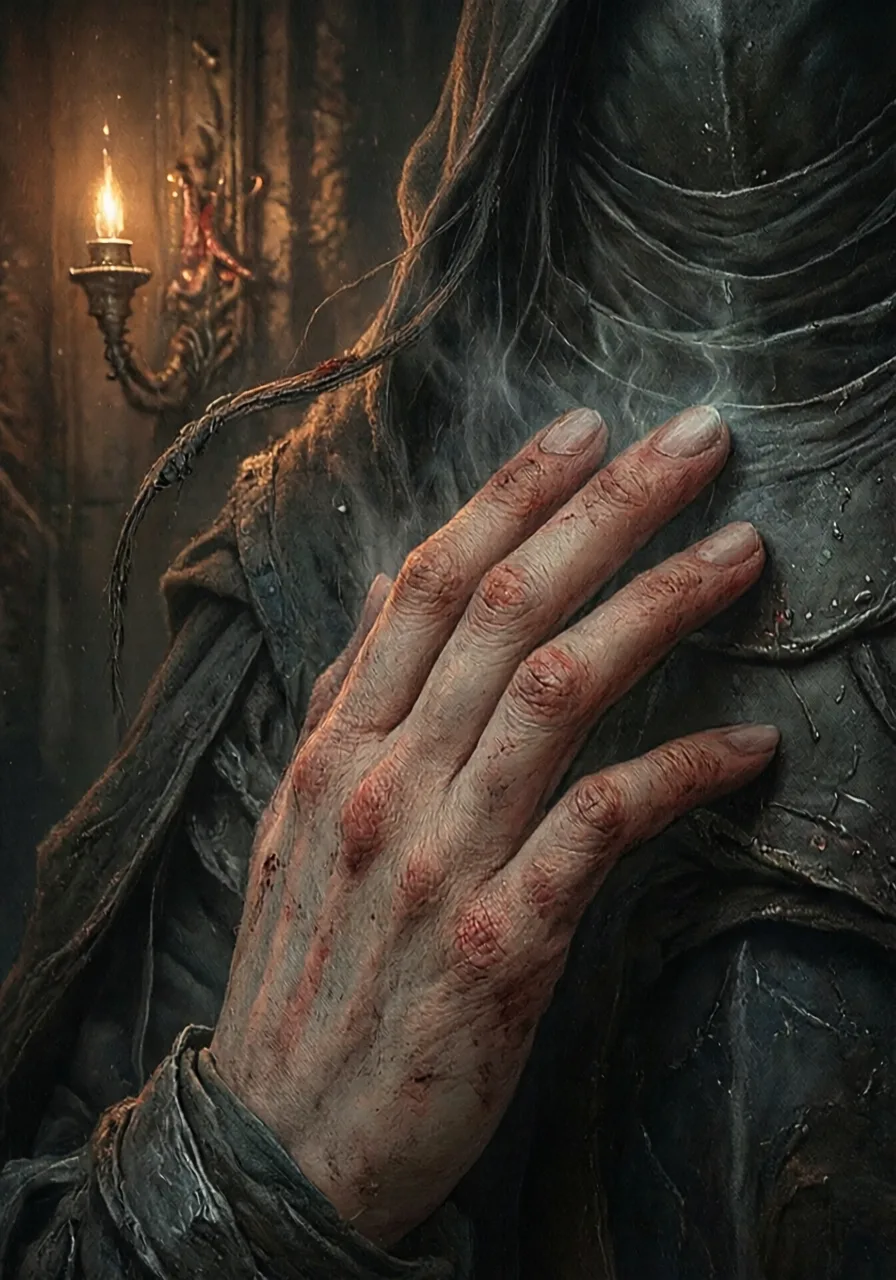
She does not know what the metal is. She has touched it once. It was cold the way the floor of the seventh cistern is cold — a cold that goes deeper than the surface accounts for. Her fingers came away clean.
Spikes rise from him. From the helmet, from the shoulder plates, from the line of the spine, from the backs of the gauntlets. The spikes are not arranged. There is no pair of horns, no symmetry, no balanced crown. They scatter across his surfaces the way thorns scatter on a stem — many of them, of varying length, irregularly placed, asymmetric. The longer ones rise from the helmet and the shoulders. The smaller ones ring the gauntlets. None of them match.
They grow from the metal. There is no seam where the spike ends and the plate begins. She has searched for one with her instruments and there is none.
A spike at three centimeters in the morning will measure two by the evening. A short one on the left gauntlet will be longer the next time she stands beside him in the corridor. The Librarian has never observed a spike moving. She has measured many of them and she has documented the changes and she has not catalogued the metal as inanimate.
The helmet has a slit. Behind the slit, a light the color of glacial melt — pale blue, steady, dim enough that it does not illuminate the corridor floor. It does not flicker. It does not brighten. When travelers describe his eyes, the Librarian corrects them. It is not eyes. It is a single band of luminescence behind a slot in a faceplate she has not been able to distinguish from the rest of the helmet.
She has never seen him remove it.
She has not determined whether there is anything to remove it from.
Entry 11,003 (continued).
"He walks. This is the thing that travelers fail to report accurately, because the walking is the least dramatic thing about him and it is the thing I have studied most.
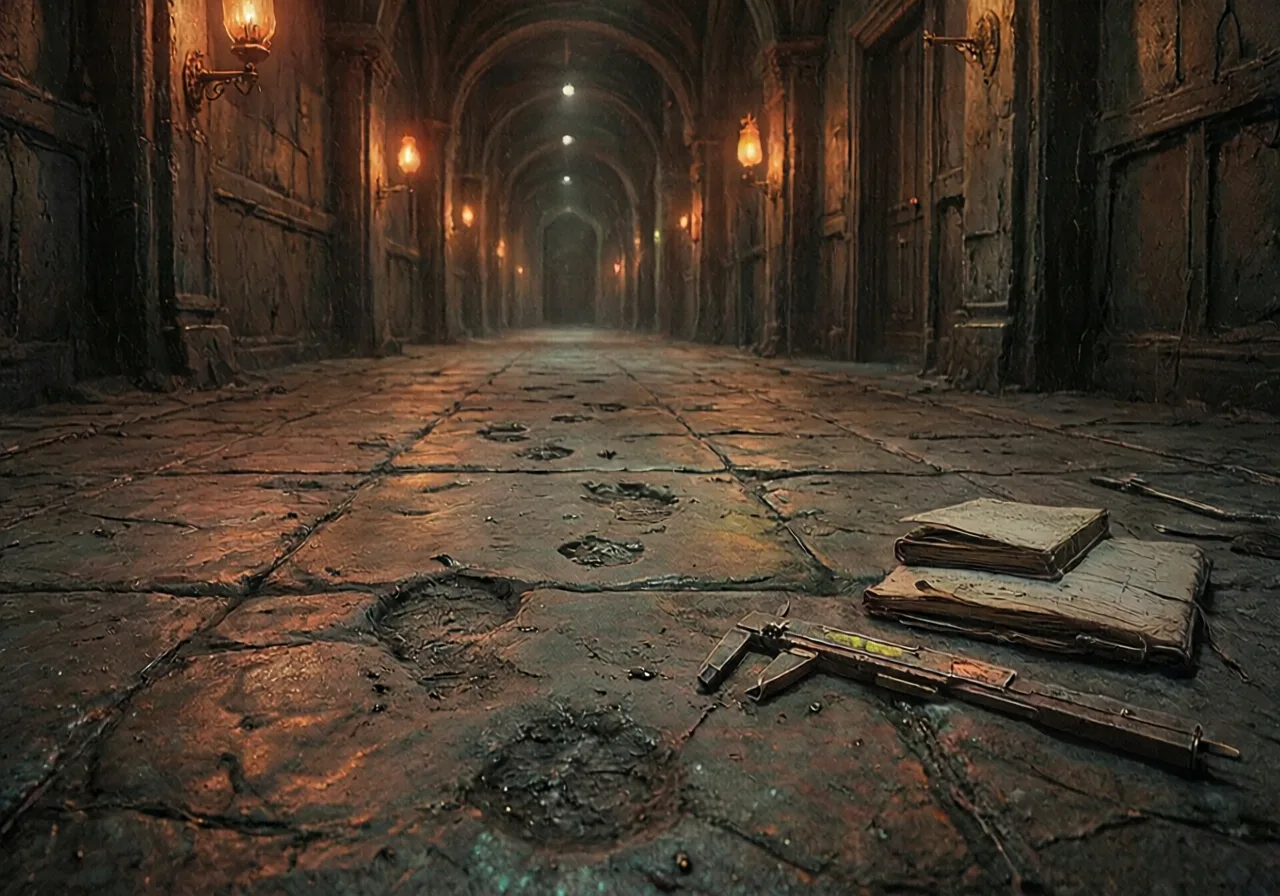
His stride is two-thirds of a meter. It does not vary. His weight falls on the ball of the foot — I have measured the wear on the stone where he patrols and the depressions are forward-loaded, shallow, consistent across every corridor. He does not drag his feet. He does not shuffle. There is no hitch in his gait, no compensation, no favoring of a side.
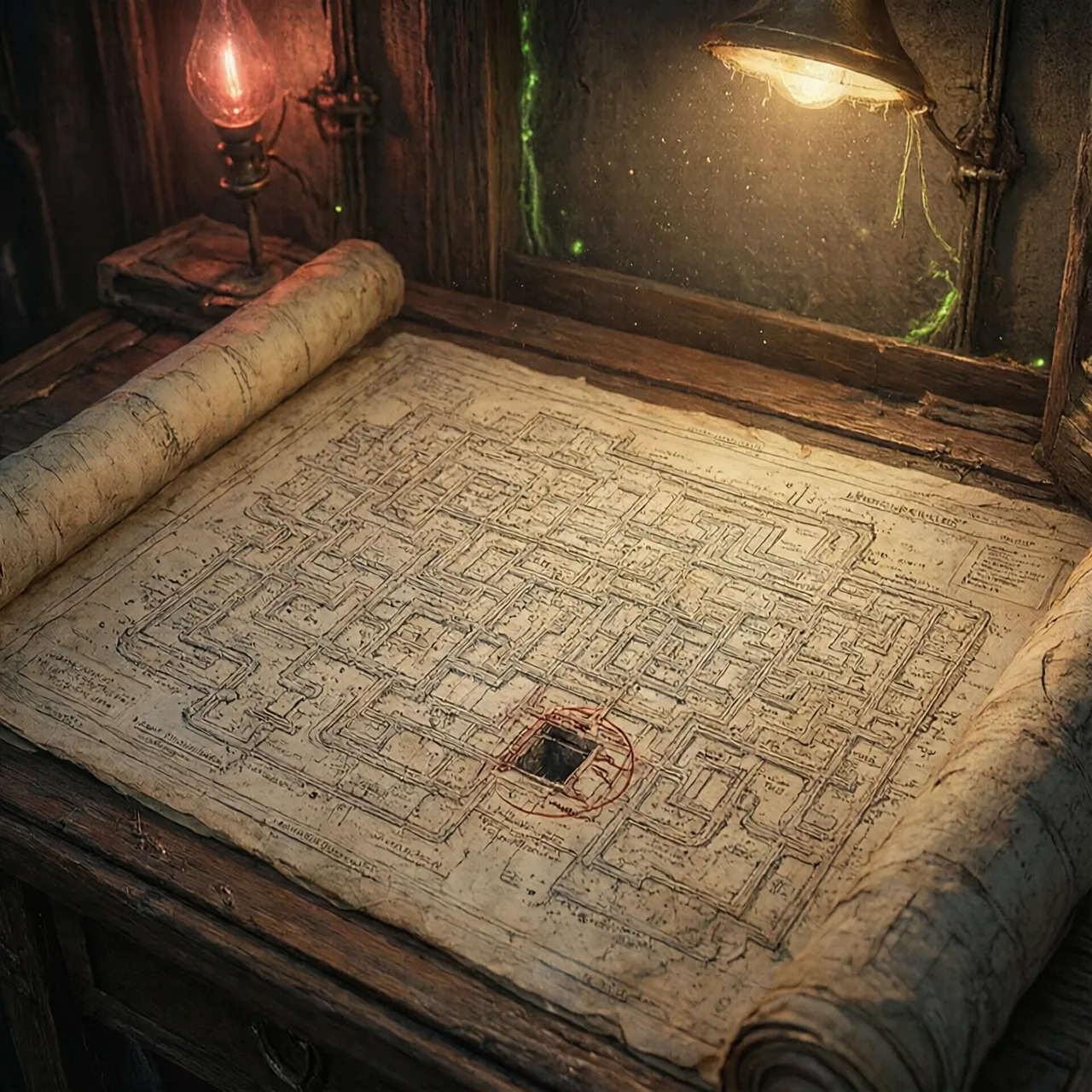
He follows routes. Not the same routes each day, but routes drawn from a set I have partially mapped. Forty-one corridors. He walks them in combinations I have not been able to predict. His rotation passes through the deep stacks, the cistern access, the outer ring junctions, and the crystallization beds. It does not always pass through the reading alcove where I work.
I noticed this. I catalogued it. I did not draw the conclusion for a long time.
His routes cover the archive. They do not cover me."