From the Catalogue of the Sixteenth Archivist, entry 12,408
Full chronicle
Page 1
The register does not record deaths.
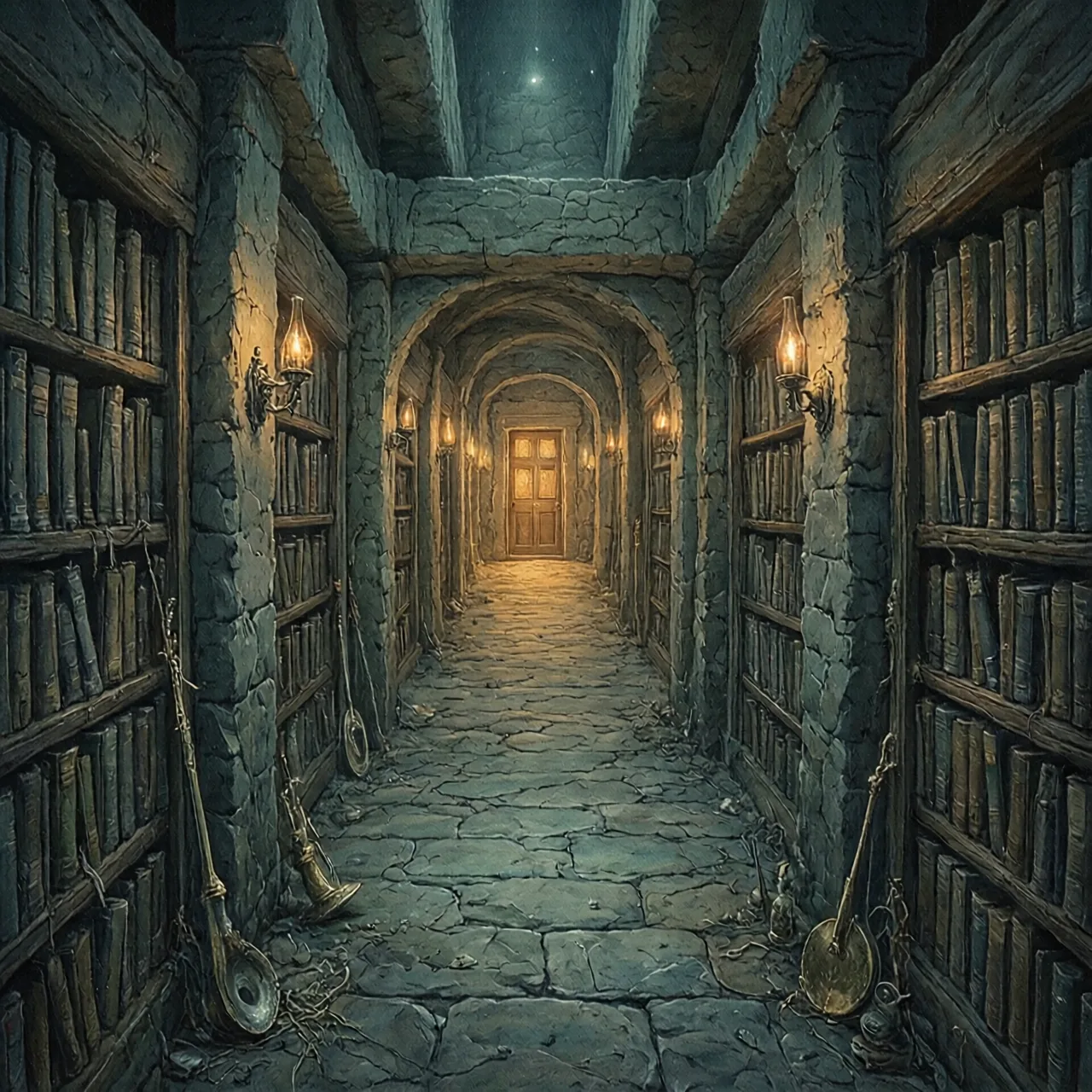
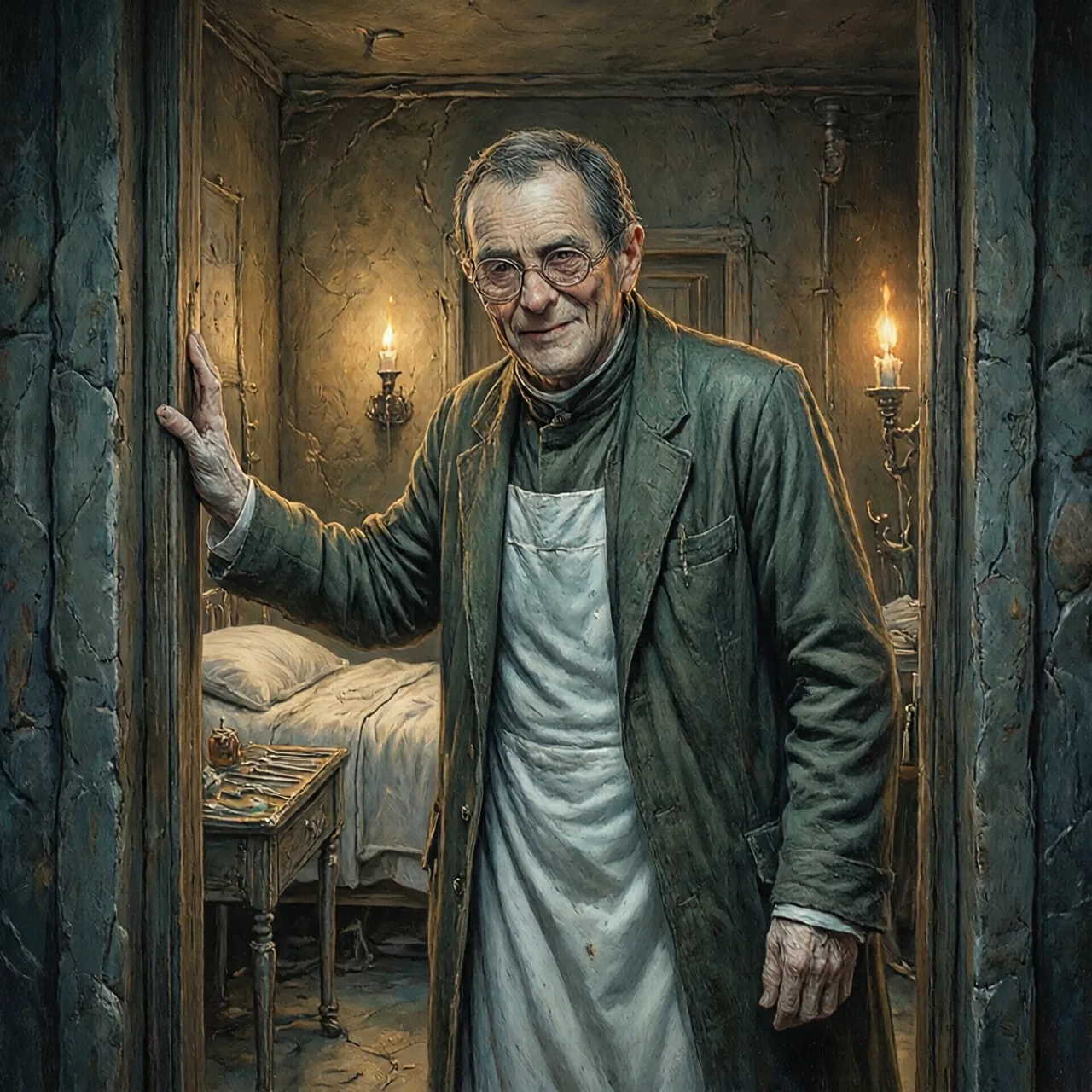
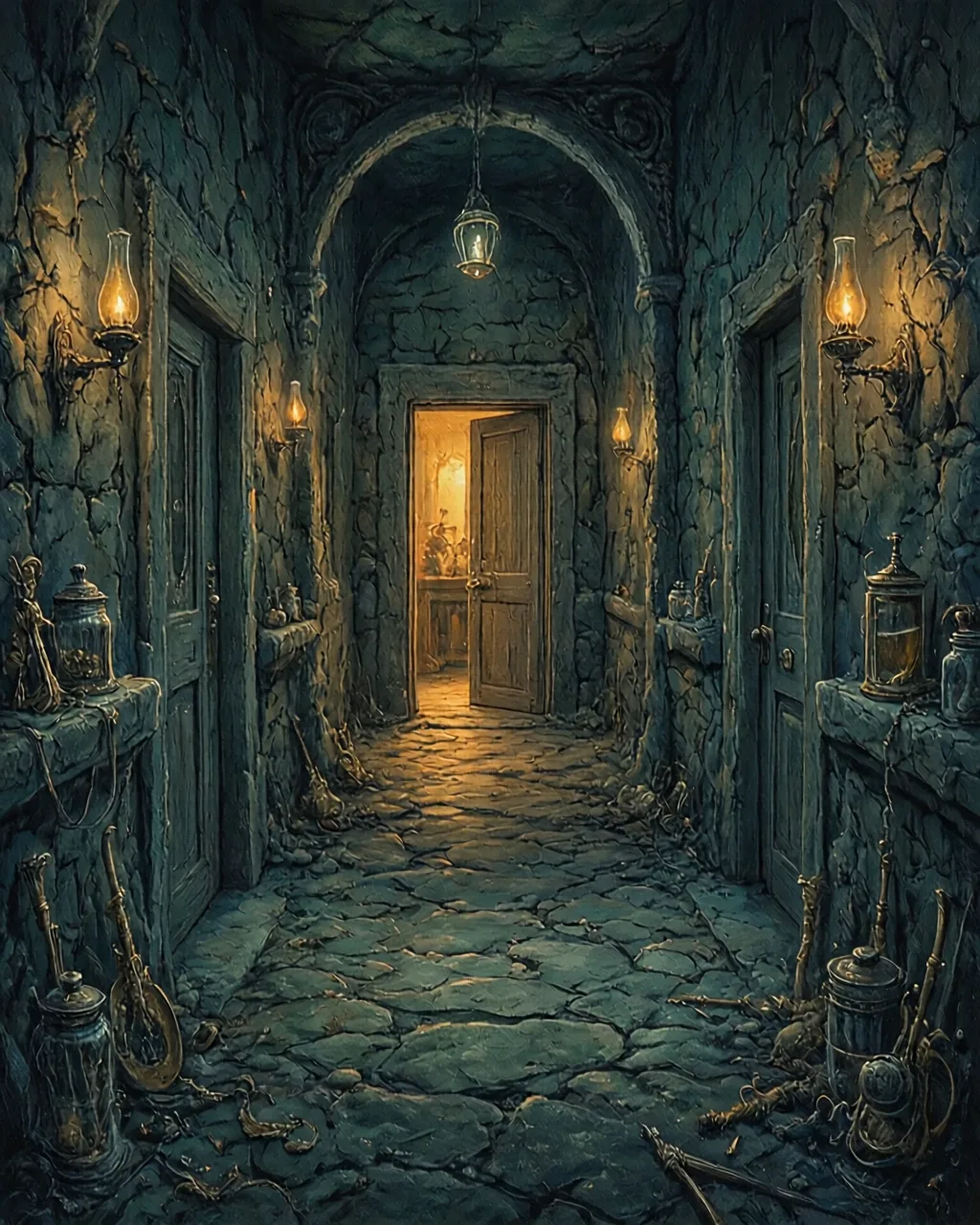
The infirmary is at the end of the west corridor, past the junction the Guardian does not cross. The personnel files do not list the attending. The Sanctum's records contain no entry for a physician whose tenure begins where his begins and does not end.
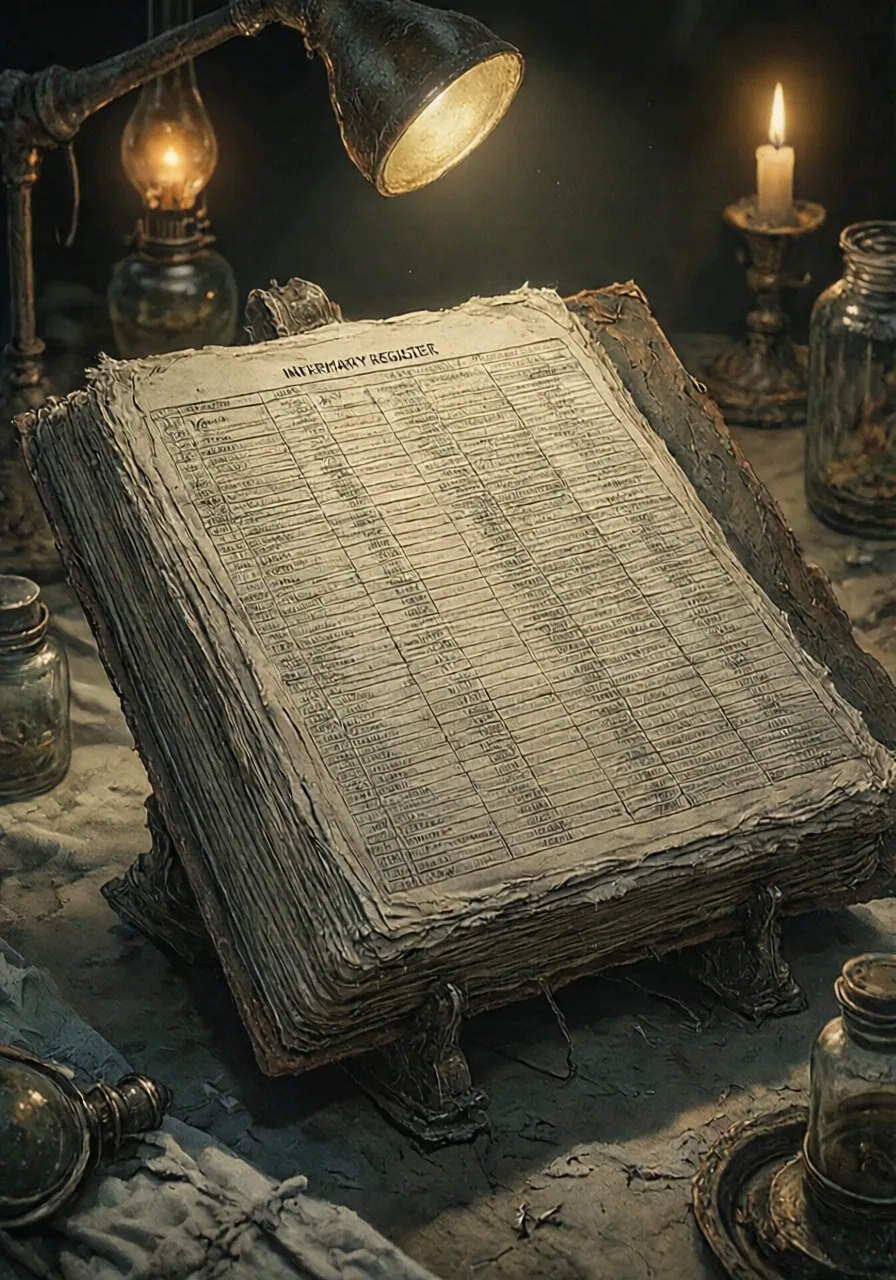
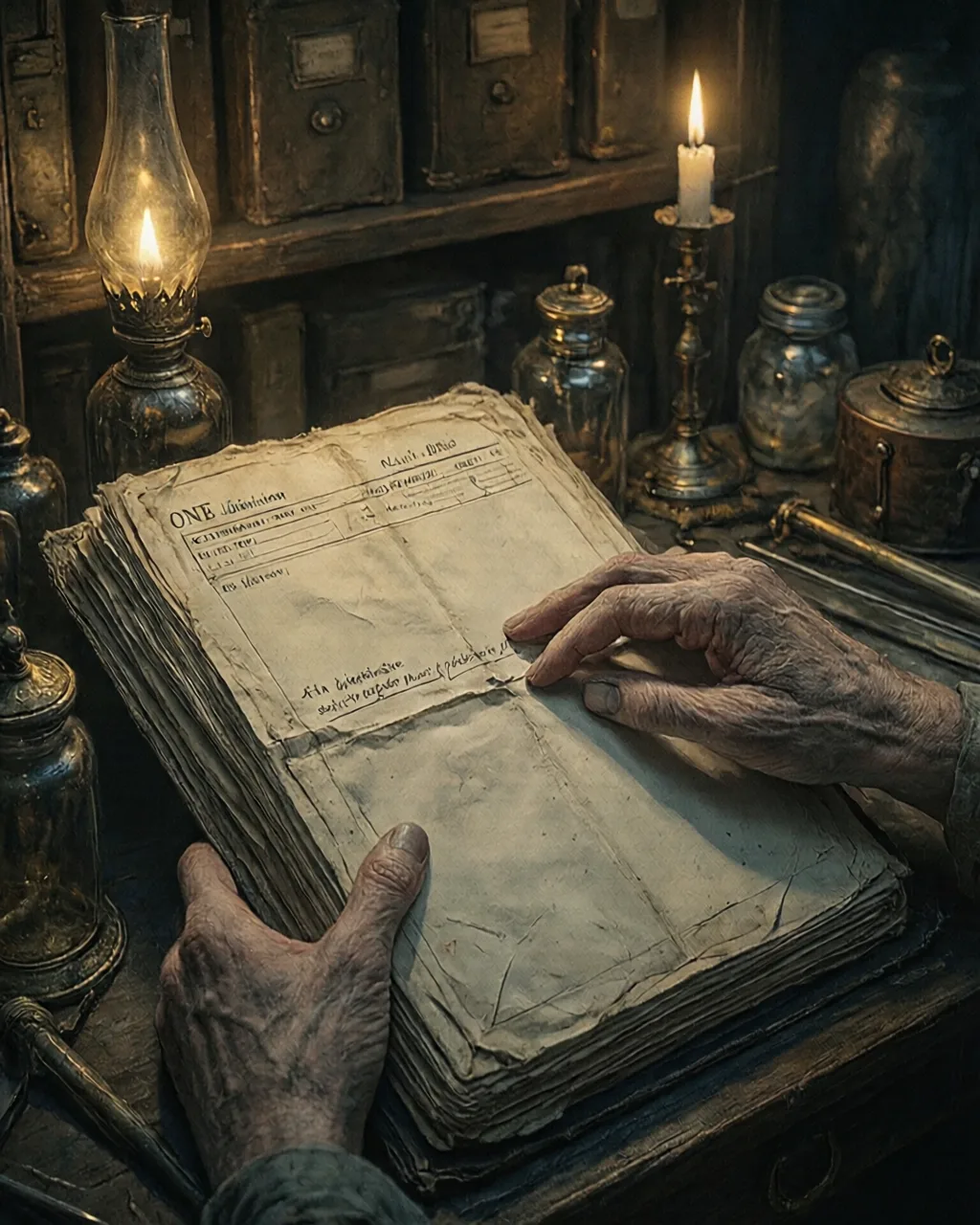
The register is continuous. The earliest admission is in a hand the Librarian cannot date. Between the first entry and the most recent: no deaths. The diagnoses vary. The procedures vary. The outcomes do not. There are two readings of a register that records no deaths. The first is the one the register intends. She has not written the second. There is one patient whose admission precedes the register's first entry. He is not admitted. He is the register.
Page 2
The appointment had been kept from the other side.
No account records waiting. The infirmary receives one patient at a time, and each arrives to find the bed empty and the instruments laid out, as though the appointment had been kept from the other side. No patient has found the door locked. Travelers who tried the door in passing, with no injury to present, have found it locked.
Page 3
It had been waiting.
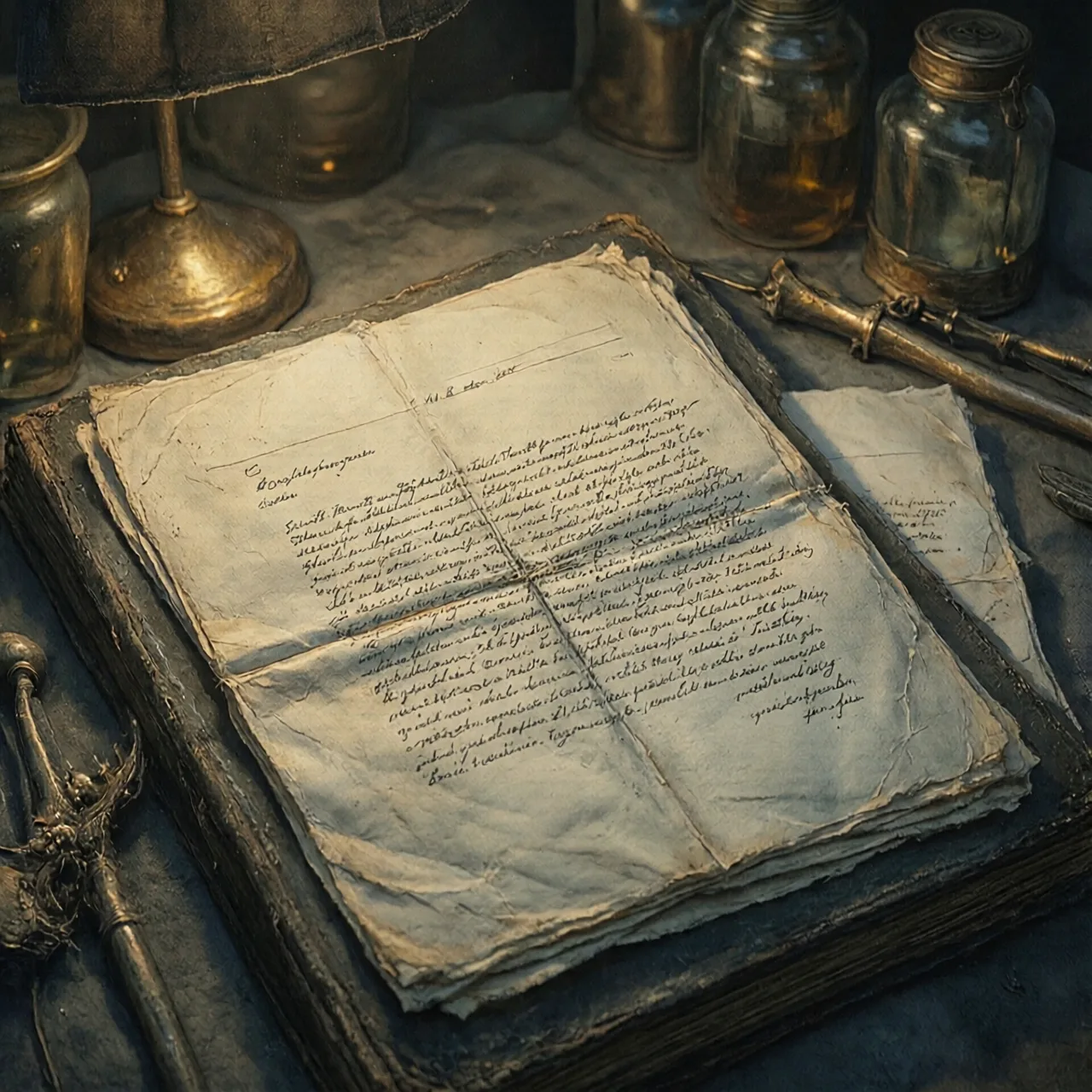
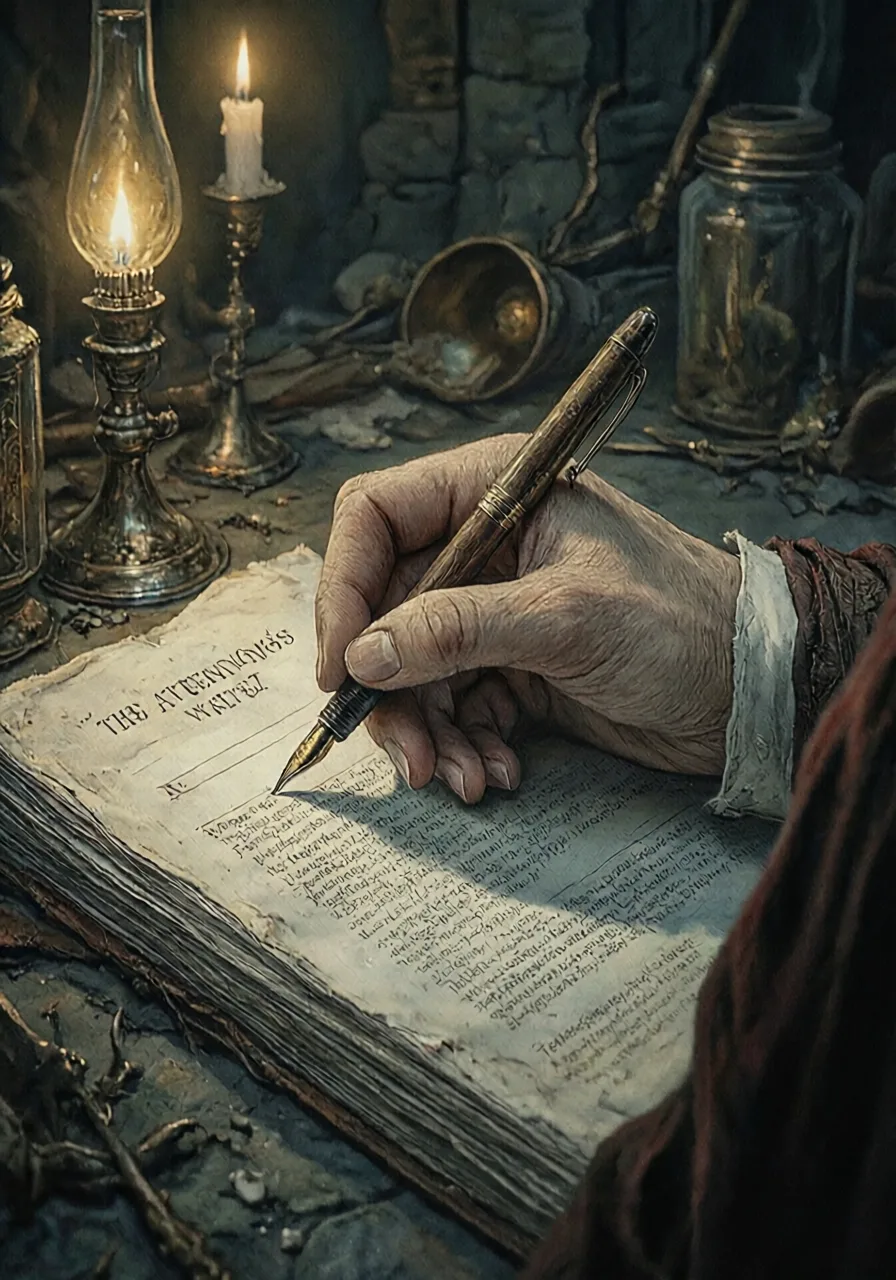
Fragment. A patient note in the attending's hand. The margins hold small sketches — an angle of incision, a knot the standard manuals do not teach.
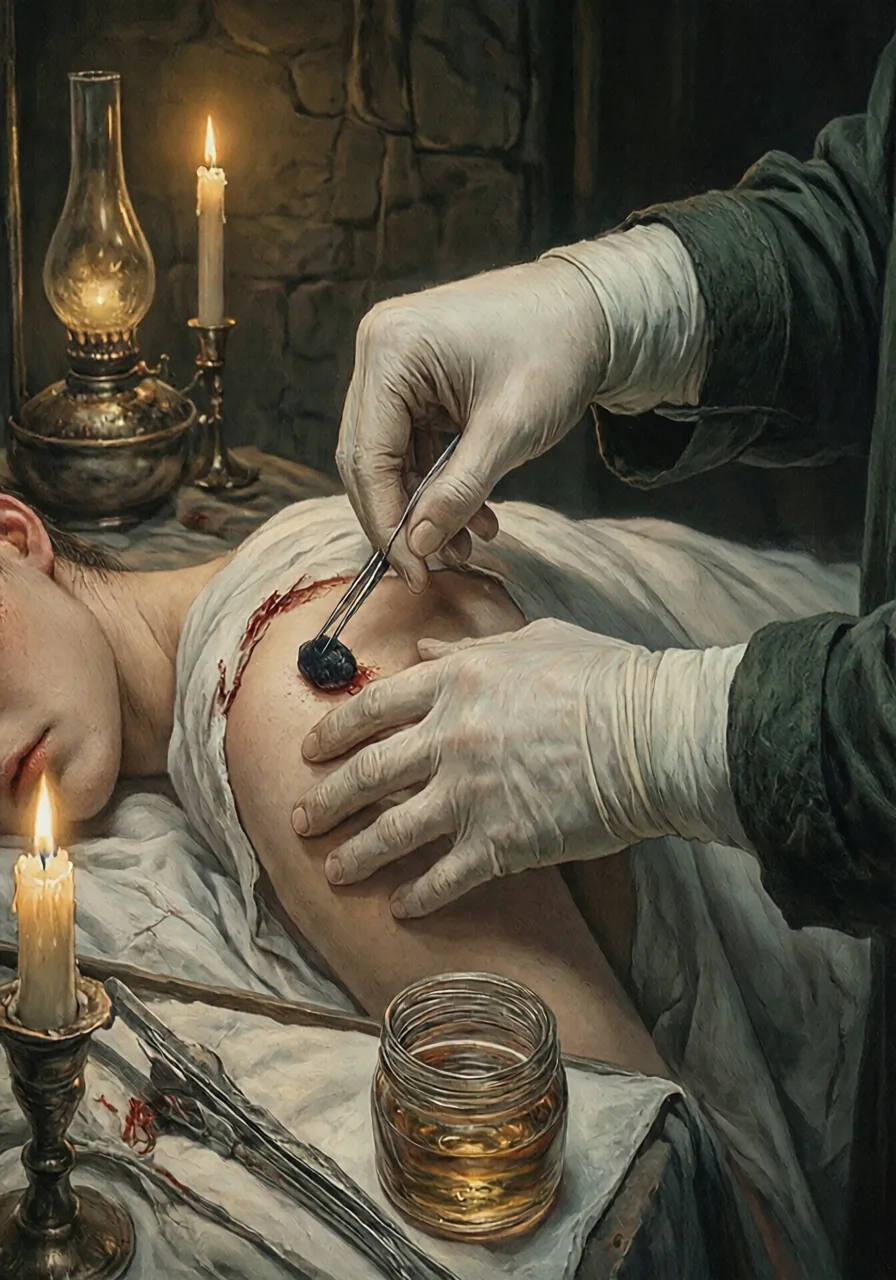
The AttendingOn examination I found the wound to be older than its depth suggests. There is tissue beneath the wound that does not belong to the shoulder. It has been present longer than the patient's other tissues. It is not his. He was waking. I did not wake him further. The tissue did not resist. It had been waiting.
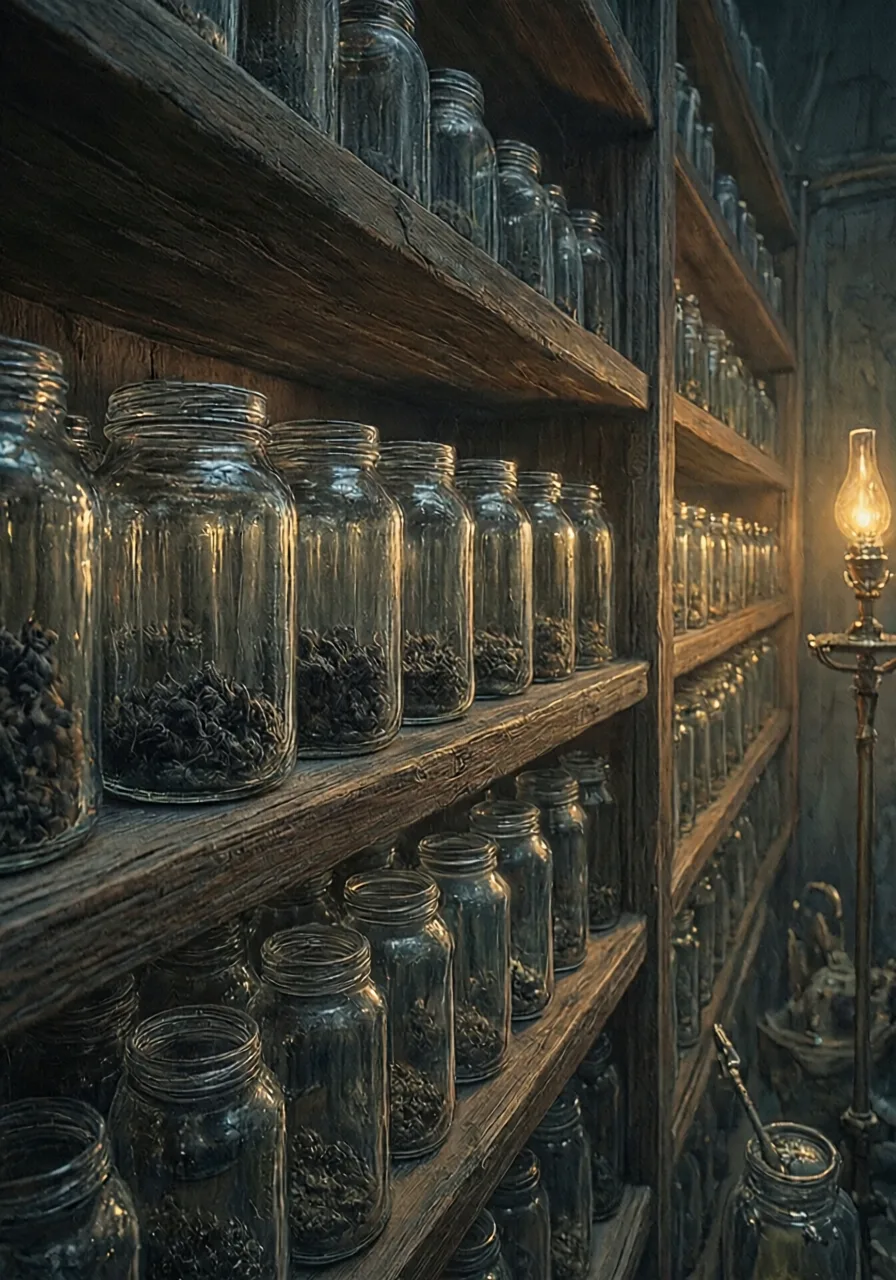
The AttendingI placed it in the third jar on the left shelf where I keep the others. The jars do not require sealing. What they hold does not attempt to leave. He did not ask to be relieved of the foreign tissue. I did not ask him.
Page 4
He weighs them at the door.
A patient arrives heavier than he leaves. The difference is consistent across the register. The difference is small. She has compared it to weights she knows. No weight she knows matches. The discharge column says mended. The scale at the door says less. Both are correct.
The AttendingI weighed him at the door. I always weigh them at the door. The quantity is entered in the ledger. The ledger does not name what the quantity corresponds to.
Page 5
Sufficient to the task.
There is a file on the fourteenth shelf, marked with a patient number and no name. It contains one admission. The admission predates the register. The diagnosis reads: to be made sufficient to the task. The discharge reads: will remember enough. The hand of the admission is not the attending's. The hand of the discharge is. The file is moved at night. In the morning the fold is different — always exposing the discharge, always concealing the diagnosis, never the same fold twice.
Page 6
Marla
Fragment. Account of a traveler treated for a broken femur, recorded in a letter to her brother, three years after the visit.
MarlaHe said my name. I had not given it. He said, 'You will sleep now, Marla. When you wake the leg will be straight. The straightness will cost you. The cost is small. I will not tell you what it is. I do not tell anyone.' The leg is straight. I dream of a room with shelves. One of the jars has something in it that I recognize the way you recognize a word you have not heard for a long time. On the nights I walk more than a mile I dream the shelves. I walk less now.
Page 7
The sleep is good.
Fragment. Left at the archive desk by a stonemason of the outer works, treated at the infirmary for sleeplessness in the year after his wife's death.
The StonemasonLast month was the anniversary and I stood at her marker and nothing rose in me. I tried to weep for her and the weeping would not come. The grief is not mended. The grief is gone — and a man knows the difference between a wound that has healed and a thing that has been taken out of him.
The StonemasonI did not ask him to take it. I would not have asked. The sleep is good. The sleep is very good. That is the worst of it.
Page 8
I know how to close this.
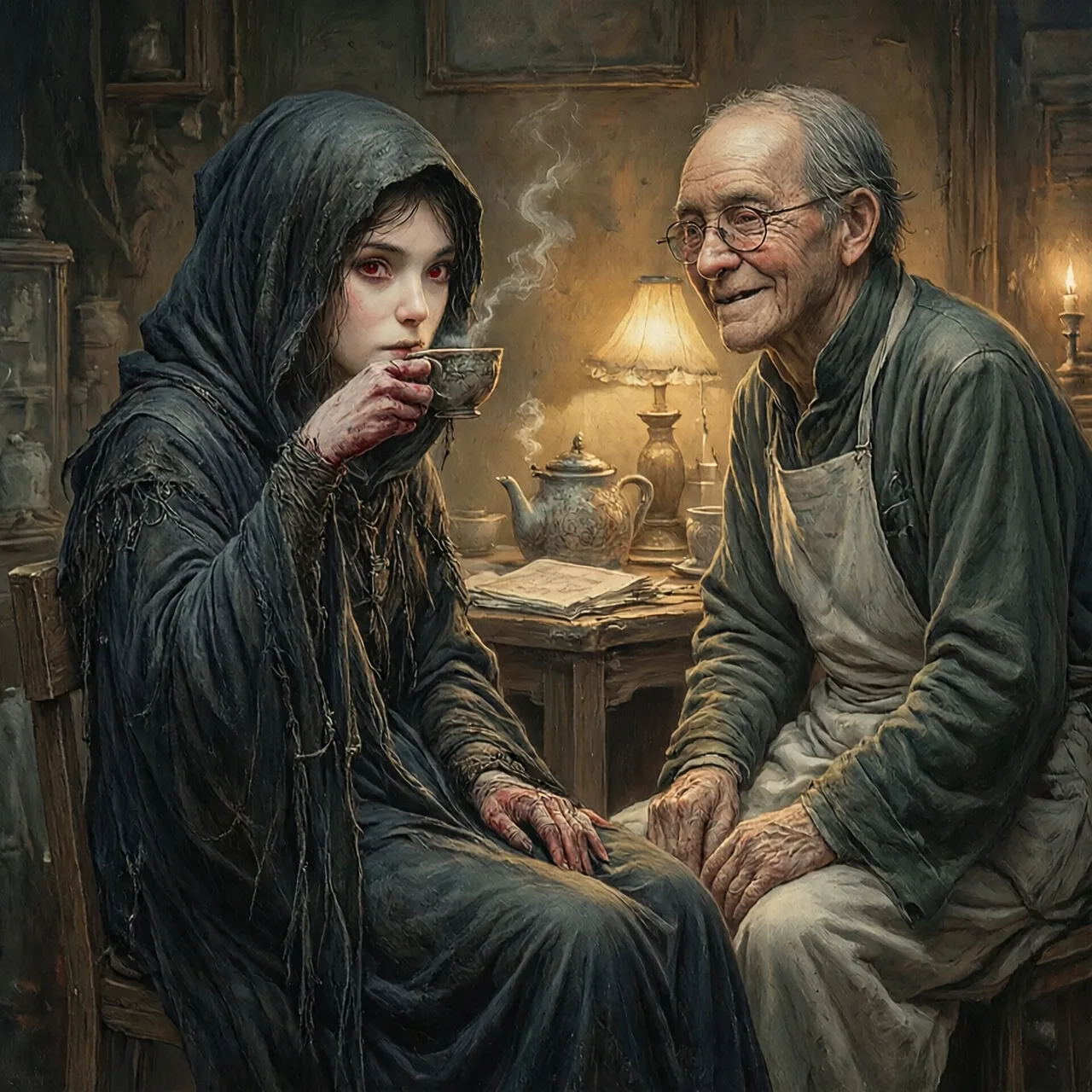
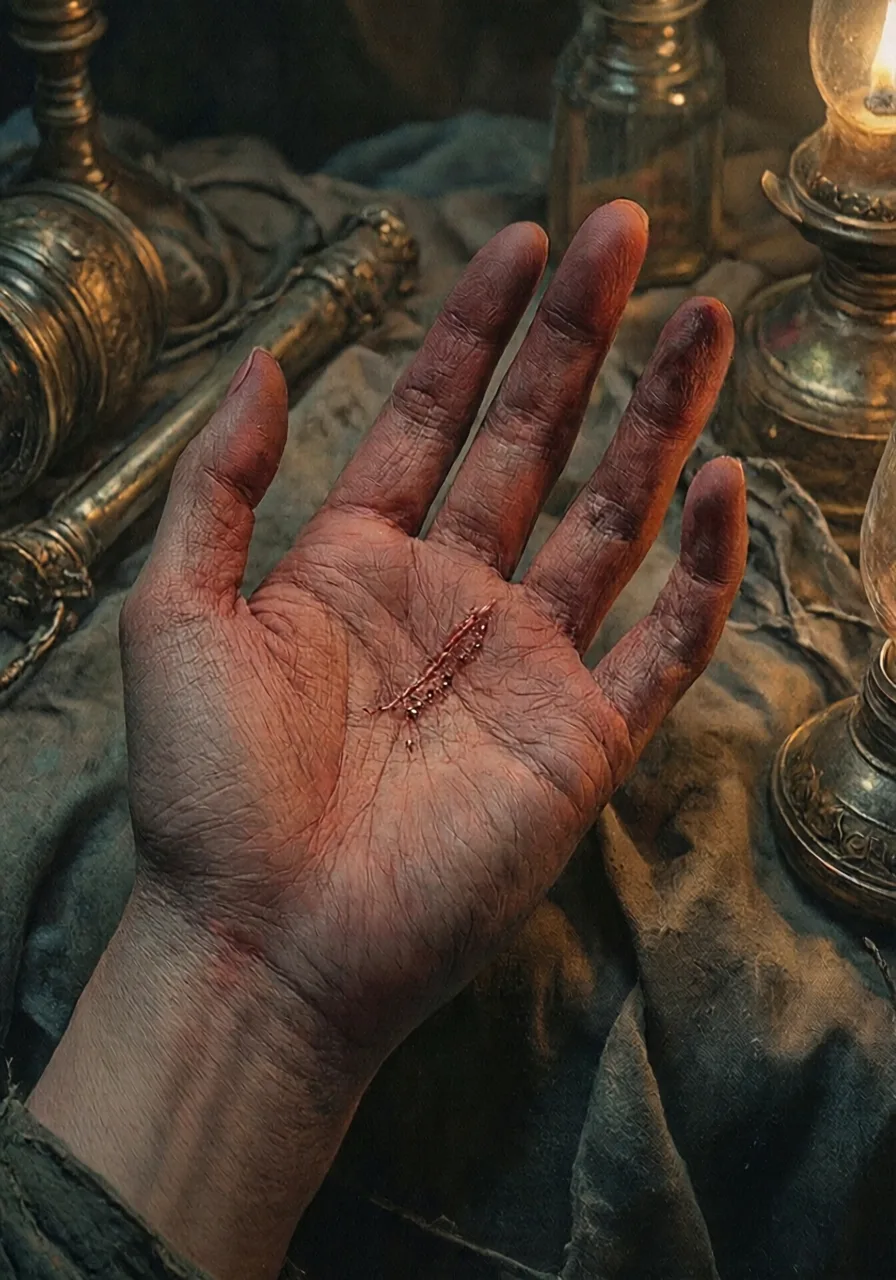
She has been treated there once. A cut on her hand she did not remember receiving, that would not close. She has since examined the shelf-edge she blamed. It is not sharp. Nothing on the route between her desk and that shelf is sharp. The cut required an edge. She has filed the question of the edge under the heading she does not re-open. He gave her tea. She does not take tea. She drank it. He called her by a name while she was drinking it. The name was not any name in her records.
The AttendingI know how to close this.
The hand is closed. She has the scar. She has the four hours she cannot account for between her arrival and her discharge. She does not know whether she gave him the name. She does not know whether the name is hers. Among the nineteen patient notes in his hand, one gives no name. The patient is entered by the designation she uses at the desk.
The AttendingAdmission: laceration of the left palm, refusing to close. The wound is clean. The edge that made it was clean. I had prepared the bed. The closure took eleven minutes. The examination took four hours. The examination is entered in the other column. She drank the tea. I said the name. She heard it. The hearing is in the column with the rest. I weighed her at the door. The quantities I enter and do not consult. Hers I consult. I have had a use for it. The use is recent.
Page 9
I am practicing.
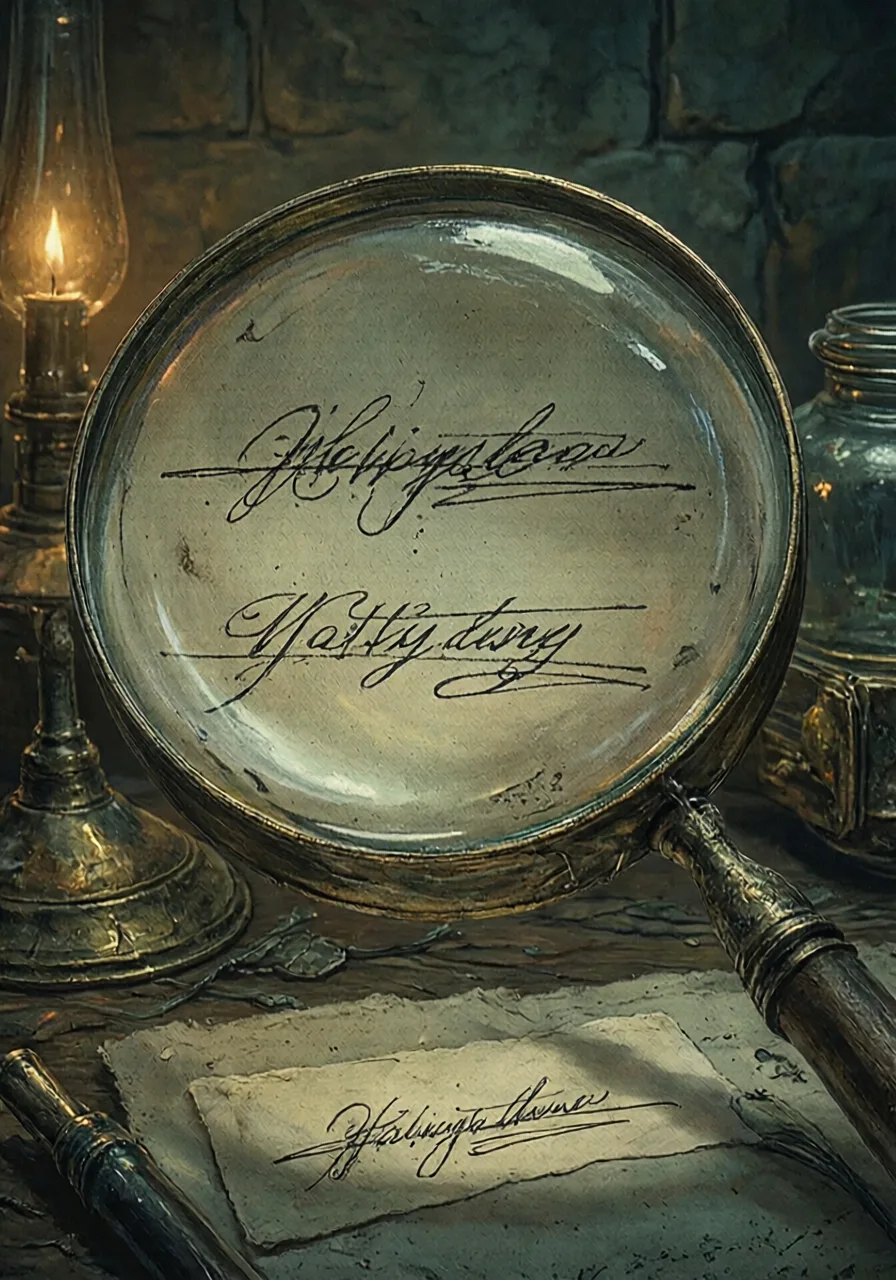
Fragment. A draft letter recovered from the back of an infirmary ledger. Unsigned. Creased where someone has folded and unfolded it. The address reads: to the woman at the desk whose page I removed.
The AttendingYou will not remember writing me. You have not written me. I am practicing. I have the page from the log of entry 10,904. I took it before the Order could see the name on it. The name was yours. I have not kept it in a file. I have kept it folded. I unfold it some evenings. I am careful with the crease. I will call you by the other name when you come again. You will not remember the hearing. I do not do this for cruelty. I do not do this for kindness. The word for why I do it is not a word I have. Do not come to the infirmary this week.
Page 10
The hand does not breathe.
She has watched his hand once, while he wrote a discharge note for her. The hand moved. The hand did not tire. The hand made no adjustment of grip. She watched for seventy-one characters. She did not see him shift. She did not see him breathe.
The attending was a man once. She has found one record confirming this — an examination from the Sanctum's earliest period: a healthy man, early forties, cleared for service. The consent signature matches the attending's hand at the level of the downstroke. It does not hold at the level of the pressure. The examined man wrote with a pressure a living hand would produce. The current attending writes with a pressure that does not vary, whether the letter is the first of a page or the last.
Page 11
The weight corresponds.
The letter has been folded once. He was careful with the crease. She has weighed it. The weight does not correspond to the paper or the wax. She has compared it against the column in his ledger that has no name. She made one comparison. The weight corresponds to an entry. The entry is dated the day of her discharge. He has sent her what the scale said she left behind. If she opens it she will know what he took. If she knows what he took she will know what she is without it. She has not opened it.
Page 12
He is weighing someone at the door.
I am at my desk. The red light is red. The stylus is in my hand. The page is turning. Somewhere in the west corridor he is weighing someone at the door. I do not go to the infirmary now.
— / —
narration auto-scrolls the prose
Section 0Frontmatter
# The Physician
From the Catalogue of the Sixteenth Archivist, entry 12,408. Provenance: the infirmary register spanning the duration of the Librarian's records and extending into a period the records cannot describe, a case of surgical instruments catalogued in three hands none of which is the Librarian's, nineteen patient notes in the hand of the physician from entry 10,904, five accounts written by travelers who had been treated at the infirmary, and a draft letter recovered from the back of an infirmary ledger. A sealed letter in the same hand, addressed to the Librarian, arrived on her desk on a morning she cannot fix more precisely than "after I began this entry, which is to say after I chose to write it." She has not opened the sealed letter.
The register does not record deaths.
Section 1Section 1
The infirmary is at the end of the west corridor, past the junction the Guardian does not cross. The Librarian has catalogued it. She has catalogued the attending by his designation in the register — the register does not give a name. The personnel files do not list him. The Sanctum's records contain no entry for a physician whose tenure begins where his begins and does not end.
The register is continuous. The earliest admission is in a hand the Librarian cannot date. The most recent was filed the morning she began this entry. Between the first and the most recent: no deaths. The discharge column is complete for every admission. The diagnoses vary. The procedures vary. The outcomes do not.
There are two readings of a register that records no deaths. The first is the one the register intends. She has not written the second.
No account records waiting. The infirmary receives one patient at a time, and each arrives to find the bed empty and the instruments laid out, as though the appointment had been kept from the other side. No patient has found the door locked. Travelers who tried the door in passing, out of curiosity, with no injury to present, have found it locked.
There is one patient whose admission precedes the register's first entry. He is not admitted. He is the register. He writes it in the hand that begins the earliest entry and has not varied across the interval the register spans.
Section 2Section 2
Fragment. A patient note in the attending's hand. Paper is the infirmary's standard issue. The margins hold small sketches — an angle of incision, a knot the standard manuals do not teach.
"Admission: traveler, male, approximately forty-three, wound at the right shoulder. Old. The wound has closed along a perimeter and reopened along the same. Infection present but not spreading. The body has reached an arrangement with the infection that the body cannot maintain.
On examination I found the wound to be older than its depth suggests. There is tissue beneath the wound that does not belong to the shoulder. It has been present longer than the patient's other tissues. It is not his.
I debrided the margin. I cleaned the cavity. I could have closed it in seven minutes and discharged him at the hour of the second bell. I did not.
I removed the foreign tissue. He was waking. I did not wake him further. The tissue did not resist. It had been waiting. I placed it in the third jar on the left shelf where I keep the others. The jars do not require sealing. What they hold does not attempt to leave.
I closed the shoulder in eleven minutes. The closure is clean. He will know the pain of the closure but not the pain of the removal. He did not ask to be relieved of the foreign tissue. I did not ask him.
Discharge at the hour of the fourth bell. He walked. He thanked me. He asked my name. I gave him the name I give. He did not press.
I weighed him at the door. I always weigh them at the door. The quantity is entered in the ledger. The ledger does not name what the quantity corresponds to."
Section 3Section 3
The hand is the hand of the physician from entry 10,904. The Librarian has compared it to every page of that log she has been able to recover. The match holds at every level — the downstroke, the spacing, the way he writes a three.
Entry 10,904 does not name him. He signs the log as the attending. He signs the infirmary register as the attending. He signs his letters to the Sanctum with the same designation. The personnel ledger does not list him. The Sanctum's records do not list him. She has searched under seventeen variations and under no variation.
There is a file on the fourteenth shelf of the east wall, marked with a patient number and no name, in the format the infirmary uses for its own staff. She has opened it. The file contains one admission. The admission predates the register. The diagnosis reads: to be made sufficient to the task. The discharge note reads: will remember enough.
The hand of the admission is not the attending's. The hand of the discharge is.
The hand of the admission matches the hand of the register from entry 10,904 — the register that arrived in a sealed case the Order could not open, filled in by no hand that worked in the Sanctum. She has filed the comparison under the heading she does not re-open.
Section 4Section 4
Fragment. Account of a traveler treated at the infirmary for a broken femur sustained on the northern climb. Recorded by the traveler in a letter to her brother, three years after the visit.
"I do not remember the pain of the break. I remember the cold. I remember walking, which I should not have been able to do. I walked into the infirmary at the west corridor and a man came out of the inner room and he looked at the leg before he looked at my face.
He said my name. I had not given it. He said it the way a man says the name of a patient he has known for years. I asked how he knew. He smiled. He did not answer. He bent and put his hand on the break. He said, 'You will sleep now, Marla. When you wake the leg will be straight. The straightness will cost you. The cost is small. I will not tell you what it is. I do not tell anyone.'
I slept. The leg is straight. I have not asked.
I dream of a room with shelves. There are jars on the shelves. One of the jars has something in it that I recognize the way you recognize a word you have not heard for a long time. I have not been back to the infirmary. I will not. I walk the leg every day. On the nights I walk more than a mile I dream the shelves. I walk less now."
Section 5Section 5
Fragment. Account left at the archive desk by a stonemason of the outer works, who had been treated at the infirmary for sleeplessness in the year after his wife's death. The account is unsigned. The Librarian has identified the hand from the works rosters. She has not recorded the identification here.
"I could not sleep. Four months I could not sleep. A man who does not sleep makes errors of the chisel, and an error of the chisel at height is a death, mine or another's. So I went where the injured go. I asked him to mend my sleep.
He sat with me. He asked what I saw when the sleep would not come. I told him: her chair, and the shape her hands made when she worked, and the sound of her with the kettle in the next room. He listened the way no one had listened. He said, 'I can close this.' I thought it a manner of speaking.
I sleep through the night now. I sleep well. I have slept well since the hour I left him.
Last month was the anniversary of her death and I stood at her marker and nothing rose in me. I tried to weep for her and the weeping would not come. I can hold her chair in my mind now the way I hold an inventory. The grief is not mended. The grief is gone, and a man knows the difference between a wound that has healed and a thing that has been taken out of him.
I did not ask him to take it. I would not have asked. The sleep is good. The sleep is very good. That is the worst of it."
Section 6Section 6
She has been treated there once. Early in her tenure. She was not sick. She had cut her hand. She did not remember the cutting. The cut would not close. She attributed the cutting to a shelf-edge she passes. She has since examined the shelf-edge. It is not sharp. Nothing on the route between her desk and that shelf is sharp. The cut required an edge. She has filed the question of the edge under the heading she does not re-open.
She walked the west corridor and passed the junction the Guardian does not cross and presented herself at the infirmary, and he received her at the door. The bed was empty. The instruments were laid out.
He did not look at her hand first. He looked at her. The look was brief and contained something she has not catalogued. She has not been able to catalogue it because she cannot hold it in her mind long enough to write it down. He smiled. He was gentle. He said: I know how to close this.
The hand is closed. She has the scar. She has the notes she took afterward. She has the four hours she cannot account for between her arrival and her discharge.
He gave her tea. She does not take tea. She drank it. The tea was warm and had a flavor she does not know the name for. He called her by a name while she was drinking it. The name was not the designation she uses at the desk. The name was not any name in her records. She has written the name in her private notes. She has not re-read them.
She does not know whether she gave him the name. She does not know whether the name is hers.
Section 7Section 7
Fragment. The nineteenth of the nineteen patient notes in the attending's hand. The admission line gives no name. The patient is entered by the designation she uses at the desk.
"Admission: laceration of the left palm, refusing to close. The wound is clean. The edge that made it was clean. I had prepared the bed.
The closure took eleven minutes. The closure is entered above. The examination took four hours. The examination is entered in the other column.
She drank the tea. I said the name. She heard it. The hearing is in the column with the rest.
I weighed her at the door. I weigh them all at the door. The quantities I enter and do not consult. Hers I consult. I have had a use for it. The use is recent."
Section 8Section 8
Fragment. A draft letter recovered from the back of a ledger in the infirmary. Unsigned. Creased where someone has folded and unfolded it. The hand is the attending's. The address reads: to the woman at the desk whose page I removed.
"You will not remember writing me. You have not written me. I am practicing.
I have the page from the log of entry 10,904. I took it before the Order could see the name on it. The name was yours. I have not kept it in a file. I have kept it folded. I unfold it some evenings. I am careful with the crease.
There is a file in my cabinet in a hand that is not mine. The diagnosis is there. The discharge is in my hand. The discharge is a lie. It is a required lie. Not all my lies have been.
You came to me once with a cut on your hand. The cut closed after my examination. The examination took four hours. The four hours are in the ledger in a column that is not the column for work. I have not given the column a name.
I will call you by the other name when you come again. You will not remember the hearing. I do not do this for cruelty. I do not do this for kindness. The word for why I do it is not a word I have.
Do not come to the infirmary this week."
Section 9Section 9
There is one record in which the attending is only a man. The Librarian has found no second. It is a physician's examination from the Sanctum's earliest period. The examined physician is named — the name is a man's name, plausible in the period, unremarkable. The examining physician signs as senior attending. The examination records a healthy man, early forties, no anomalies, cleared for service.
She has compared the hand of the examined man's consent signature to the hand of the current attending.
The match holds at the level of the downstroke. It does not hold at the level of the pressure. The examined man wrote with a pressure a living hand would produce. The current attending writes with a pressure that does not vary across the duration of his tenure. The downward force is the same whether the ink is fresh or old, whether the letter is the first of a page or the last.
She has watched his hand once, in the infirmary, while he wrote a discharge note for her. The hand moved. The hand did not tire. The hand made no adjustment of grip. She watched for seventy-one characters. She did not see him shift. She did not see him breathe.
She has applied the pressure test to the file on the fourteenth shelf. The admission is a hand that drew breath between the letters. The discharge is not. The diagnosis and the discharge are separated by a procedure the file does not describe.
The file is moved at night. She does not watch. In the morning the fold of the paper is different — always exposing the discharge, always concealing the diagnosis, never the same fold twice.
Section 10Section 10
The infirmary continues to treat.
Travelers arrive at the west corridor with injuries the instruments of this place can set. Some bring injuries the instruments cannot set. Both are received. Both are discharged.
The jars in the inner room are in rows. She has counted the rows through the door when it was open during a delivery. The count is in her notes. She has not entered it in this file. The jars are unlabelled. The accounts agree that he does not consult the shelves. He does not need to. He knows them the way she knows her catalogue — by what was taken, and when, and from whom.
A patient arrives heavier than he leaves. The difference is consistent across the register. The difference is small. She has compared it to weights she knows. No weight she knows matches. The discharge column says mended. The scale at the door says less. Both are correct. She has catalogued elsewhere that two records can disagree and both be correct. She did not expect to need the finding here.
She has not asked. He has not offered.
Entry 12,408, final annotation.
"The hand that admitted him is the hand of the register from the Visionaries. I have filed the comparison under the heading I do not re-open. There is one more page in the file.
The sealed letter is in the drawer with the tome. The paper is his. The hand is his. The seal is a wax I do not keep. The letter has been folded once. He was careful with the crease.
I have weighed the letter. The weight does not correspond to the paper or the wax. I have compared it against the column in his ledger that has no name. I made one comparison. The weight corresponds to an entry. The entry is dated the day of my discharge.
He has sent me the difference. He has sent me what the scale said I left behind. If I open it I will know what he took. If I know what he took I will know what I am without it. I have not opened it.
I am at my desk. The red light is red. The stylus is in my hand. The page is turning.
Somewhere in the west corridor he is weighing someone at the door.
I do not go to the infirmary now."
Section 0Frontmatter
# The Physician
From the Catalogue of the Sixteenth Archivist, entry 12,408. Provenance: the infirmary register spanning the duration of the Librarian's records and extending into a period the records cannot describe, a case of surgical instruments catalogued in three hands none of which is the Librarian's, nineteen patient notes in the hand of the physician from entry 10,904, five accounts written by travelers who had been treated at the infirmary, and a draft letter recovered from the back of an infirmary ledger. A sealed letter in the same hand, addressed to the Librarian, arrived on her desk on a morning she cannot fix more precisely than "after I began this entry, which is to say after I chose to write it." She has not opened the sealed letter.
The register does not record deaths.
Section 1Section 1
The infirmary is at the end of the west corridor, past the junction the Guardian does not cross. The Librarian has catalogued it. She has catalogued the attending by his designation in the register — the register does not give a name. The personnel files do not list him. The Sanctum's records contain no entry for a physician whose tenure begins where his begins and does not end.
The register is continuous. The earliest admission is in a hand the Librarian cannot date. The most recent was filed the morning she began this entry. Between the first and the most recent: no deaths. The discharge column is complete for every admission. The diagnoses vary. The procedures vary. The outcomes do not.
There are two readings of a register that records no deaths. The first is the one the register intends. She has not written the second.
No account records waiting. The infirmary receives one patient at a time, and each arrives to find the bed empty and the instruments laid out, as though the appointment had been kept from the other side. No patient has found the door locked. Travelers who tried the door in passing, out of curiosity, with no injury to present, have found it locked.
There is one patient whose admission precedes the register's first entry. He is not admitted. He is the register. He writes it in the hand that begins the earliest entry and has not varied across the interval the register spans.
Section 2Section 2
Fragment. A patient note in the attending's hand. Paper is the infirmary's standard issue. The margins hold small sketches — an angle of incision, a knot the standard manuals do not teach.
"Admission: traveler, male, approximately forty-three, wound at the right shoulder. Old. The wound has closed along a perimeter and reopened along the same. Infection present but not spreading. The body has reached an arrangement with the infection that the body cannot maintain.
On examination I found the wound to be older than its depth suggests. There is tissue beneath the wound that does not belong to the shoulder. It has been present longer than the patient's other tissues. It is not his.
I debrided the margin. I cleaned the cavity. I could have closed it in seven minutes and discharged him at the hour of the second bell. I did not.
I removed the foreign tissue. He was waking. I did not wake him further. The tissue did not resist. It had been waiting. I placed it in the third jar on the left shelf where I keep the others. The jars do not require sealing. What they hold does not attempt to leave.
I closed the shoulder in eleven minutes. The closure is clean. He will know the pain of the closure but not the pain of the removal. He did not ask to be relieved of the foreign tissue. I did not ask him.
Discharge at the hour of the fourth bell. He walked. He thanked me. He asked my name. I gave him the name I give. He did not press.
I weighed him at the door. I always weigh them at the door. The quantity is entered in the ledger. The ledger does not name what the quantity corresponds to."
Section 3Section 3
The hand is the hand of the physician from entry 10,904. The Librarian has compared it to every page of that log she has been able to recover. The match holds at every level — the downstroke, the spacing, the way he writes a three.
Entry 10,904 does not name him. He signs the log as the attending. He signs the infirmary register as the attending. He signs his letters to the Sanctum with the same designation. The personnel ledger does not list him. The Sanctum's records do not list him. She has searched under seventeen variations and under no variation.
There is a file on the fourteenth shelf of the east wall, marked with a patient number and no name, in the format the infirmary uses for its own staff. She has opened it. The file contains one admission. The admission predates the register. The diagnosis reads: to be made sufficient to the task. The discharge note reads: will remember enough.
The hand of the admission is not the attending's. The hand of the discharge is.
The hand of the admission matches the hand of the register from entry 10,904 — the register that arrived in a sealed case the Order could not open, filled in by no hand that worked in the Sanctum. She has filed the comparison under the heading she does not re-open.
Section 4Section 4
Fragment. Account of a traveler treated at the infirmary for a broken femur sustained on the northern climb. Recorded by the traveler in a letter to her brother, three years after the visit.
"I do not remember the pain of the break. I remember the cold. I remember walking, which I should not have been able to do. I walked into the infirmary at the west corridor and a man came out of the inner room and he looked at the leg before he looked at my face.
He said my name. I had not given it. He said it the way a man says the name of a patient he has known for years. I asked how he knew. He smiled. He did not answer. He bent and put his hand on the break. He said, 'You will sleep now, Marla. When you wake the leg will be straight. The straightness will cost you. The cost is small. I will not tell you what it is. I do not tell anyone.'
I slept. The leg is straight. I have not asked.
I dream of a room with shelves. There are jars on the shelves. One of the jars has something in it that I recognize the way you recognize a word you have not heard for a long time. I have not been back to the infirmary. I will not. I walk the leg every day. On the nights I walk more than a mile I dream the shelves. I walk less now."
Section 5Section 5
Fragment. Account left at the archive desk by a stonemason of the outer works, who had been treated at the infirmary for sleeplessness in the year after his wife's death. The account is unsigned. The Librarian has identified the hand from the works rosters. She has not recorded the identification here.
"I could not sleep. Four months I could not sleep. A man who does not sleep makes errors of the chisel, and an error of the chisel at height is a death, mine or another's. So I went where the injured go. I asked him to mend my sleep.
He sat with me. He asked what I saw when the sleep would not come. I told him: her chair, and the shape her hands made when she worked, and the sound of her with the kettle in the next room. He listened the way no one had listened. He said, 'I can close this.' I thought it a manner of speaking.
I sleep through the night now. I sleep well. I have slept well since the hour I left him.
Last month was the anniversary of her death and I stood at her marker and nothing rose in me. I tried to weep for her and the weeping would not come. I can hold her chair in my mind now the way I hold an inventory. The grief is not mended. The grief is gone, and a man knows the difference between a wound that has healed and a thing that has been taken out of him.
I did not ask him to take it. I would not have asked. The sleep is good. The sleep is very good. That is the worst of it."
Section 6Section 6
She has been treated there once. Early in her tenure. She was not sick. She had cut her hand. She did not remember the cutting. The cut would not close. She attributed the cutting to a shelf-edge she passes. She has since examined the shelf-edge. It is not sharp. Nothing on the route between her desk and that shelf is sharp. The cut required an edge. She has filed the question of the edge under the heading she does not re-open.
She walked the west corridor and passed the junction the Guardian does not cross and presented herself at the infirmary, and he received her at the door. The bed was empty. The instruments were laid out.
He did not look at her hand first. He looked at her. The look was brief and contained something she has not catalogued. She has not been able to catalogue it because she cannot hold it in her mind long enough to write it down. He smiled. He was gentle. He said: I know how to close this.
The hand is closed. She has the scar. She has the notes she took afterward. She has the four hours she cannot account for between her arrival and her discharge.
He gave her tea. She does not take tea. She drank it. The tea was warm and had a flavor she does not know the name for. He called her by a name while she was drinking it. The name was not the designation she uses at the desk. The name was not any name in her records. She has written the name in her private notes. She has not re-read them.
She does not know whether she gave him the name. She does not know whether the name is hers.
Section 7Section 7
Fragment. The nineteenth of the nineteen patient notes in the attending's hand. The admission line gives no name. The patient is entered by the designation she uses at the desk.
"Admission: laceration of the left palm, refusing to close. The wound is clean. The edge that made it was clean. I had prepared the bed.
The closure took eleven minutes. The closure is entered above. The examination took four hours. The examination is entered in the other column.
She drank the tea. I said the name. She heard it. The hearing is in the column with the rest.
I weighed her at the door. I weigh them all at the door. The quantities I enter and do not consult. Hers I consult. I have had a use for it. The use is recent."
Section 8Section 8
Fragment. A draft letter recovered from the back of a ledger in the infirmary. Unsigned. Creased where someone has folded and unfolded it. The hand is the attending's. The address reads: to the woman at the desk whose page I removed.
"You will not remember writing me. You have not written me. I am practicing.
I have the page from the log of entry 10,904. I took it before the Order could see the name on it. The name was yours. I have not kept it in a file. I have kept it folded. I unfold it some evenings. I am careful with the crease.
There is a file in my cabinet in a hand that is not mine. The diagnosis is there. The discharge is in my hand. The discharge is a lie. It is a required lie. Not all my lies have been.
You came to me once with a cut on your hand. The cut closed after my examination. The examination took four hours. The four hours are in the ledger in a column that is not the column for work. I have not given the column a name.
I will call you by the other name when you come again. You will not remember the hearing. I do not do this for cruelty. I do not do this for kindness. The word for why I do it is not a word I have.
Do not come to the infirmary this week."
Section 9Section 9
There is one record in which the attending is only a man. The Librarian has found no second. It is a physician's examination from the Sanctum's earliest period. The examined physician is named — the name is a man's name, plausible in the period, unremarkable. The examining physician signs as senior attending. The examination records a healthy man, early forties, no anomalies, cleared for service.
She has compared the hand of the examined man's consent signature to the hand of the current attending.
The match holds at the level of the downstroke. It does not hold at the level of the pressure. The examined man wrote with a pressure a living hand would produce. The current attending writes with a pressure that does not vary across the duration of his tenure. The downward force is the same whether the ink is fresh or old, whether the letter is the first of a page or the last.
She has watched his hand once, in the infirmary, while he wrote a discharge note for her. The hand moved. The hand did not tire. The hand made no adjustment of grip. She watched for seventy-one characters. She did not see him shift. She did not see him breathe.
She has applied the pressure test to the file on the fourteenth shelf. The admission is a hand that drew breath between the letters. The discharge is not. The diagnosis and the discharge are separated by a procedure the file does not describe.
The file is moved at night. She does not watch. In the morning the fold of the paper is different — always exposing the discharge, always concealing the diagnosis, never the same fold twice.
Section 10Section 10
The infirmary continues to treat.
Travelers arrive at the west corridor with injuries the instruments of this place can set. Some bring injuries the instruments cannot set. Both are received. Both are discharged.
The jars in the inner room are in rows. She has counted the rows through the door when it was open during a delivery. The count is in her notes. She has not entered it in this file. The jars are unlabelled. The accounts agree that he does not consult the shelves. He does not need to. He knows them the way she knows her catalogue — by what was taken, and when, and from whom.
A patient arrives heavier than he leaves. The difference is consistent across the register. The difference is small. She has compared it to weights she knows. No weight she knows matches. The discharge column says mended. The scale at the door says less. Both are correct. She has catalogued elsewhere that two records can disagree and both be correct. She did not expect to need the finding here.
She has not asked. He has not offered.
Entry 12,408, final annotation.
"The hand that admitted him is the hand of the register from the Visionaries. I have filed the comparison under the heading I do not re-open. There is one more page in the file.
The sealed letter is in the drawer with the tome. The paper is his. The hand is his. The seal is a wax I do not keep. The letter has been folded once. He was careful with the crease.
I have weighed the letter. The weight does not correspond to the paper or the wax. I have compared it against the column in his ledger that has no name. I made one comparison. The weight corresponds to an entry. The entry is dated the day of my discharge.
He has sent me the difference. He has sent me what the scale said I left behind. If I open it I will know what he took. If I know what he took I will know what I am without it. I have not opened it.
I am at my desk. The red light is red. The stylus is in my hand. The page is turning.
Somewhere in the west corridor he is weighing someone at the door.
I do not go to the infirmary now."
Page 1
The register does not record deaths.
The infirmary is at the end of the west corridor, past the junction the Guardian does not cross. The personnel files do not list the attending. The Sanctum's records contain no entry for a physician whose tenure begins where his begins and does not end.
The register is continuous. The earliest admission is in a hand the Librarian cannot date. Between the first entry and the most recent: no deaths. The diagnoses vary. The procedures vary. The outcomes do not. There are two readings of a register that records no deaths. The first is the one the register intends. She has not written the second. There is one patient whose admission precedes the register's first entry. He is not admitted. He is the register.
Page 2
The appointment had been kept from the other side.
No account records waiting. The infirmary receives one patient at a time, and each arrives to find the bed empty and the instruments laid out, as though the appointment had been kept from the other side. No patient has found the door locked. Travelers who tried the door in passing, with no injury to present, have found it locked.
Page 3
It had been waiting.
Fragment. A patient note in the attending's hand. The margins hold small sketches — an angle of incision, a knot the standard manuals do not teach.
The AttendingOn examination I found the wound to be older than its depth suggests. There is tissue beneath the wound that does not belong to the shoulder. It has been present longer than the patient's other tissues. It is not his. He was waking. I did not wake him further. The tissue did not resist. It had been waiting.
The AttendingI placed it in the third jar on the left shelf where I keep the others. The jars do not require sealing. What they hold does not attempt to leave. He did not ask to be relieved of the foreign tissue. I did not ask him.
Page 4
He weighs them at the door.
A patient arrives heavier than he leaves. The difference is consistent across the register. The difference is small. She has compared it to weights she knows. No weight she knows matches. The discharge column says mended. The scale at the door says less. Both are correct.
The AttendingI weighed him at the door. I always weigh them at the door. The quantity is entered in the ledger. The ledger does not name what the quantity corresponds to.
Page 5
Sufficient to the task.
There is a file on the fourteenth shelf, marked with a patient number and no name. It contains one admission. The admission predates the register. The diagnosis reads: to be made sufficient to the task. The discharge reads: will remember enough. The hand of the admission is not the attending's. The hand of the discharge is. The file is moved at night. In the morning the fold is different — always exposing the discharge, always concealing the diagnosis, never the same fold twice.
Page 6
Marla
Fragment. Account of a traveler treated for a broken femur, recorded in a letter to her brother, three years after the visit.
MarlaHe said my name. I had not given it. He said, 'You will sleep now, Marla. When you wake the leg will be straight. The straightness will cost you. The cost is small. I will not tell you what it is. I do not tell anyone.' The leg is straight. I dream of a room with shelves. One of the jars has something in it that I recognize the way you recognize a word you have not heard for a long time. On the nights I walk more than a mile I dream the shelves. I walk less now.
Page 7
The sleep is good.
Fragment. Left at the archive desk by a stonemason of the outer works, treated at the infirmary for sleeplessness in the year after his wife's death.
The StonemasonLast month was the anniversary and I stood at her marker and nothing rose in me. I tried to weep for her and the weeping would not come. The grief is not mended. The grief is gone — and a man knows the difference between a wound that has healed and a thing that has been taken out of him.
The StonemasonI did not ask him to take it. I would not have asked. The sleep is good. The sleep is very good. That is the worst of it.
Page 8
I know how to close this.
She has been treated there once. A cut on her hand she did not remember receiving, that would not close. She has since examined the shelf-edge she blamed. It is not sharp. Nothing on the route between her desk and that shelf is sharp. The cut required an edge. She has filed the question of the edge under the heading she does not re-open. He gave her tea. She does not take tea. She drank it. He called her by a name while she was drinking it. The name was not any name in her records.
The AttendingI know how to close this.
The hand is closed. She has the scar. She has the four hours she cannot account for between her arrival and her discharge. She does not know whether she gave him the name. She does not know whether the name is hers. Among the nineteen patient notes in his hand, one gives no name. The patient is entered by the designation she uses at the desk.
The AttendingAdmission: laceration of the left palm, refusing to close. The wound is clean. The edge that made it was clean. I had prepared the bed. The closure took eleven minutes. The examination took four hours. The examination is entered in the other column. She drank the tea. I said the name. She heard it. The hearing is in the column with the rest. I weighed her at the door. The quantities I enter and do not consult. Hers I consult. I have had a use for it. The use is recent.
Page 9
I am practicing.
Fragment. A draft letter recovered from the back of an infirmary ledger. Unsigned. Creased where someone has folded and unfolded it. The address reads: to the woman at the desk whose page I removed.
The AttendingYou will not remember writing me. You have not written me. I am practicing. I have the page from the log of entry 10,904. I took it before the Order could see the name on it. The name was yours. I have not kept it in a file. I have kept it folded. I unfold it some evenings. I am careful with the crease. I will call you by the other name when you come again. You will not remember the hearing. I do not do this for cruelty. I do not do this for kindness. The word for why I do it is not a word I have. Do not come to the infirmary this week.
Page 10
The hand does not breathe.
She has watched his hand once, while he wrote a discharge note for her. The hand moved. The hand did not tire. The hand made no adjustment of grip. She watched for seventy-one characters. She did not see him shift. She did not see him breathe.
The attending was a man once. She has found one record confirming this — an examination from the Sanctum's earliest period: a healthy man, early forties, cleared for service. The consent signature matches the attending's hand at the level of the downstroke. It does not hold at the level of the pressure. The examined man wrote with a pressure a living hand would produce. The current attending writes with a pressure that does not vary, whether the letter is the first of a page or the last.
Page 11
The weight corresponds.
The letter has been folded once. He was careful with the crease. She has weighed it. The weight does not correspond to the paper or the wax. She has compared it against the column in his ledger that has no name. She made one comparison. The weight corresponds to an entry. The entry is dated the day of her discharge. He has sent her what the scale said she left behind. If she opens it she will know what he took. If she knows what he took she will know what she is without it. She has not opened it.
Page 12
He is weighing someone at the door.
I am at my desk. The red light is red. The stylus is in my hand. The page is turning. Somewhere in the west corridor he is weighing someone at the door. I do not go to the infirmary now.
Listen ModeClick a section to begin listening
The chronicle plays section by section in the Librarian's voice. As each section plays, the corresponding pages of the comic are highlighted. Switch to Scroll, Flip, Prose, or Split at any time — the audio continues, and you can follow visually.
Section 0Frontmatter
# The Physician
From the Catalogue of the Sixteenth Archivist, entry 12,408. Provenance: the infirmary register spanning the duration of the Librarian's records and extending into a period the records cannot describe, a case of surgical instruments catalogued in three hands none of which is the Librarian's, nineteen patient notes in the hand of the physician from entry 10,904, five accounts written by travelers who had been treated at the infirmary, and a draft letter recovered from the back of an infirmary ledger. A sealed letter in the same hand, addressed to the Librarian, arrived on her desk on a morning she cannot fix more precisely than "after I began this entry, which is to say after I chose to write it." She has not opened the sealed letter.
The register does not record deaths.
Section 1Section 1
The infirmary is at the end of the west corridor, past the junction the Guardian does not cross. The Librarian has catalogued it. She has catalogued the attending by his designation in the register — the register does not give a name. The personnel files do not list him. The Sanctum's records contain no entry for a physician whose tenure begins where his begins and does not end.
The register is continuous. The earliest admission is in a hand the Librarian cannot date. The most recent was filed the morning she began this entry. Between the first and the most recent: no deaths. The discharge column is complete for every admission. The diagnoses vary. The procedures vary. The outcomes do not.
There are two readings of a register that records no deaths. The first is the one the register intends. She has not written the second.
No account records waiting. The infirmary receives one patient at a time, and each arrives to find the bed empty and the instruments laid out, as though the appointment had been kept from the other side. No patient has found the door locked. Travelers who tried the door in passing, out of curiosity, with no injury to present, have found it locked.
There is one patient whose admission precedes the register's first entry. He is not admitted. He is the register. He writes it in the hand that begins the earliest entry and has not varied across the interval the register spans.
Section 2Section 2
Fragment. A patient note in the attending's hand. Paper is the infirmary's standard issue. The margins hold small sketches — an angle of incision, a knot the standard manuals do not teach.
"Admission: traveler, male, approximately forty-three, wound at the right shoulder. Old. The wound has closed along a perimeter and reopened along the same. Infection present but not spreading. The body has reached an arrangement with the infection that the body cannot maintain.
On examination I found the wound to be older than its depth suggests. There is tissue beneath the wound that does not belong to the shoulder. It has been present longer than the patient's other tissues. It is not his.
I debrided the margin. I cleaned the cavity. I could have closed it in seven minutes and discharged him at the hour of the second bell. I did not.
I removed the foreign tissue. He was waking. I did not wake him further. The tissue did not resist. It had been waiting. I placed it in the third jar on the left shelf where I keep the others. The jars do not require sealing. What they hold does not attempt to leave.
I closed the shoulder in eleven minutes. The closure is clean. He will know the pain of the closure but not the pain of the removal. He did not ask to be relieved of the foreign tissue. I did not ask him.
Discharge at the hour of the fourth bell. He walked. He thanked me. He asked my name. I gave him the name I give. He did not press.
I weighed him at the door. I always weigh them at the door. The quantity is entered in the ledger. The ledger does not name what the quantity corresponds to."
Section 3Section 3
The hand is the hand of the physician from entry 10,904. The Librarian has compared it to every page of that log she has been able to recover. The match holds at every level — the downstroke, the spacing, the way he writes a three.
Entry 10,904 does not name him. He signs the log as the attending. He signs the infirmary register as the attending. He signs his letters to the Sanctum with the same designation. The personnel ledger does not list him. The Sanctum's records do not list him. She has searched under seventeen variations and under no variation.
There is a file on the fourteenth shelf of the east wall, marked with a patient number and no name, in the format the infirmary uses for its own staff. She has opened it. The file contains one admission. The admission predates the register. The diagnosis reads: to be made sufficient to the task. The discharge note reads: will remember enough.
The hand of the admission is not the attending's. The hand of the discharge is.
The hand of the admission matches the hand of the register from entry 10,904 — the register that arrived in a sealed case the Order could not open, filled in by no hand that worked in the Sanctum. She has filed the comparison under the heading she does not re-open.
Section 4Section 4
Fragment. Account of a traveler treated at the infirmary for a broken femur sustained on the northern climb. Recorded by the traveler in a letter to her brother, three years after the visit.
"I do not remember the pain of the break. I remember the cold. I remember walking, which I should not have been able to do. I walked into the infirmary at the west corridor and a man came out of the inner room and he looked at the leg before he looked at my face.
He said my name. I had not given it. He said it the way a man says the name of a patient he has known for years. I asked how he knew. He smiled. He did not answer. He bent and put his hand on the break. He said, 'You will sleep now, Marla. When you wake the leg will be straight. The straightness will cost you. The cost is small. I will not tell you what it is. I do not tell anyone.'
I slept. The leg is straight. I have not asked.
I dream of a room with shelves. There are jars on the shelves. One of the jars has something in it that I recognize the way you recognize a word you have not heard for a long time. I have not been back to the infirmary. I will not. I walk the leg every day. On the nights I walk more than a mile I dream the shelves. I walk less now."
Section 5Section 5
Fragment. Account left at the archive desk by a stonemason of the outer works, who had been treated at the infirmary for sleeplessness in the year after his wife's death. The account is unsigned. The Librarian has identified the hand from the works rosters. She has not recorded the identification here.
"I could not sleep. Four months I could not sleep. A man who does not sleep makes errors of the chisel, and an error of the chisel at height is a death, mine or another's. So I went where the injured go. I asked him to mend my sleep.
He sat with me. He asked what I saw when the sleep would not come. I told him: her chair, and the shape her hands made when she worked, and the sound of her with the kettle in the next room. He listened the way no one had listened. He said, 'I can close this.' I thought it a manner of speaking.
I sleep through the night now. I sleep well. I have slept well since the hour I left him.
Last month was the anniversary of her death and I stood at her marker and nothing rose in me. I tried to weep for her and the weeping would not come. I can hold her chair in my mind now the way I hold an inventory. The grief is not mended. The grief is gone, and a man knows the difference between a wound that has healed and a thing that has been taken out of him.
I did not ask him to take it. I would not have asked. The sleep is good. The sleep is very good. That is the worst of it."
Section 6Section 6
She has been treated there once. Early in her tenure. She was not sick. She had cut her hand. She did not remember the cutting. The cut would not close. She attributed the cutting to a shelf-edge she passes. She has since examined the shelf-edge. It is not sharp. Nothing on the route between her desk and that shelf is sharp. The cut required an edge. She has filed the question of the edge under the heading she does not re-open.
She walked the west corridor and passed the junction the Guardian does not cross and presented herself at the infirmary, and he received her at the door. The bed was empty. The instruments were laid out.
He did not look at her hand first. He looked at her. The look was brief and contained something she has not catalogued. She has not been able to catalogue it because she cannot hold it in her mind long enough to write it down. He smiled. He was gentle. He said: I know how to close this.
The hand is closed. She has the scar. She has the notes she took afterward. She has the four hours she cannot account for between her arrival and her discharge.
He gave her tea. She does not take tea. She drank it. The tea was warm and had a flavor she does not know the name for. He called her by a name while she was drinking it. The name was not the designation she uses at the desk. The name was not any name in her records. She has written the name in her private notes. She has not re-read them.
She does not know whether she gave him the name. She does not know whether the name is hers.
Section 7Section 7
Fragment. The nineteenth of the nineteen patient notes in the attending's hand. The admission line gives no name. The patient is entered by the designation she uses at the desk.
"Admission: laceration of the left palm, refusing to close. The wound is clean. The edge that made it was clean. I had prepared the bed.
The closure took eleven minutes. The closure is entered above. The examination took four hours. The examination is entered in the other column.
She drank the tea. I said the name. She heard it. The hearing is in the column with the rest.
I weighed her at the door. I weigh them all at the door. The quantities I enter and do not consult. Hers I consult. I have had a use for it. The use is recent."
Section 8Section 8
Fragment. A draft letter recovered from the back of a ledger in the infirmary. Unsigned. Creased where someone has folded and unfolded it. The hand is the attending's. The address reads: to the woman at the desk whose page I removed.
"You will not remember writing me. You have not written me. I am practicing.
I have the page from the log of entry 10,904. I took it before the Order could see the name on it. The name was yours. I have not kept it in a file. I have kept it folded. I unfold it some evenings. I am careful with the crease.
There is a file in my cabinet in a hand that is not mine. The diagnosis is there. The discharge is in my hand. The discharge is a lie. It is a required lie. Not all my lies have been.
You came to me once with a cut on your hand. The cut closed after my examination. The examination took four hours. The four hours are in the ledger in a column that is not the column for work. I have not given the column a name.
I will call you by the other name when you come again. You will not remember the hearing. I do not do this for cruelty. I do not do this for kindness. The word for why I do it is not a word I have.
Do not come to the infirmary this week."
Section 9Section 9
There is one record in which the attending is only a man. The Librarian has found no second. It is a physician's examination from the Sanctum's earliest period. The examined physician is named — the name is a man's name, plausible in the period, unremarkable. The examining physician signs as senior attending. The examination records a healthy man, early forties, no anomalies, cleared for service.
She has compared the hand of the examined man's consent signature to the hand of the current attending.
The match holds at the level of the downstroke. It does not hold at the level of the pressure. The examined man wrote with a pressure a living hand would produce. The current attending writes with a pressure that does not vary across the duration of his tenure. The downward force is the same whether the ink is fresh or old, whether the letter is the first of a page or the last.
She has watched his hand once, in the infirmary, while he wrote a discharge note for her. The hand moved. The hand did not tire. The hand made no adjustment of grip. She watched for seventy-one characters. She did not see him shift. She did not see him breathe.
She has applied the pressure test to the file on the fourteenth shelf. The admission is a hand that drew breath between the letters. The discharge is not. The diagnosis and the discharge are separated by a procedure the file does not describe.
The file is moved at night. She does not watch. In the morning the fold of the paper is different — always exposing the discharge, always concealing the diagnosis, never the same fold twice.
Section 10Section 10
The infirmary continues to treat.
Travelers arrive at the west corridor with injuries the instruments of this place can set. Some bring injuries the instruments cannot set. Both are received. Both are discharged.
The jars in the inner room are in rows. She has counted the rows through the door when it was open during a delivery. The count is in her notes. She has not entered it in this file. The jars are unlabelled. The accounts agree that he does not consult the shelves. He does not need to. He knows them the way she knows her catalogue — by what was taken, and when, and from whom.
A patient arrives heavier than he leaves. The difference is consistent across the register. The difference is small. She has compared it to weights she knows. No weight she knows matches. The discharge column says mended. The scale at the door says less. Both are correct. She has catalogued elsewhere that two records can disagree and both be correct. She did not expect to need the finding here.
She has not asked. He has not offered.
Entry 12,408, final annotation.
"The hand that admitted him is the hand of the register from the Visionaries. I have filed the comparison under the heading I do not re-open. There is one more page in the file.
The sealed letter is in the drawer with the tome. The paper is his. The hand is his. The seal is a wax I do not keep. The letter has been folded once. He was careful with the crease.
I have weighed the letter. The weight does not correspond to the paper or the wax. I have compared it against the column in his ledger that has no name. I made one comparison. The weight corresponds to an entry. The entry is dated the day of my discharge.
He has sent me the difference. He has sent me what the scale said I left behind. If I open it I will know what he took. If I know what he took I will know what I am without it. I have not opened it.
I am at my desk. The red light is red. The stylus is in my hand. The page is turning.
Somewhere in the west corridor he is weighing someone at the door.